


 Home
HomeHow Flexible Neon LED Strip Light Tubes Shape Continuous Architectural Lighting
 Aug 21,2026

 reddy
reddy
Continuous light can define a wall, follow a corner, outline a display or create a luminous line across furniture and architectural surfaces. Compared with exposed LED tape, Flexible Neon LED Strip Light Tubes use a shaped silicone body to diffuse the individual LED points and create a smoother illuminated appearance. Different cross-sections, bending directions and mounting details allow the same basic idea to serve surface-mounted, recessed, corner and waterproof applications.
SANAG's range includes compact silicone profiles, embedded and wall-recessed designs, corner profiles, anti-glare honeycomb structures and matching accessory families. This guide explains how these options differ and what designers, lighting contractors, distributors and OEM buyers should confirm before selecting a flexible neon solution.
How Flexible Silicone Neon Tubes Create a Smooth Light Line
A flexible neon tube is an extruded silicone profile designed to hold or integrate a compatible LED strip. Its optical section spreads light across the visible surface, while the body protects and supports the strip. The profile geometry determines where the light exits, how the product bends and whether it sits on a surface, inside a recess or across a corner.
Not every listing represents the same scope of supply. Some projects require a silicone housing that will be matched with a separately selected LED strip, while others require a finished luminous assembly with LEDs, cable, connectors and sealed end caps. When requesting flexible neon LED strip tubing, clearly state whether the quotation should cover the silicone extrusion only or a complete ready-to-install lighting product.
Silicone is useful for curved linear lighting because it can follow shapes that would be difficult to produce with a rigid aluminum profile. However, flexibility has limits. Every model has an intended bending direction and minimum bend radius. Twisting the tube, bending against its designed axis or forcing a tight curve can damage the LED strip or distort the light-emitting surface.
Comparing Flexible Neon Profile Types
SANAG's category contains silicone profiles and accessories for several mounting conditions. The dimensions below are taken from specific current product pages and should be treated as model references, not as universal dimensions for the entire range.
| Example model | Cross-section | Design format | Typical project use |
|---|---|---|---|
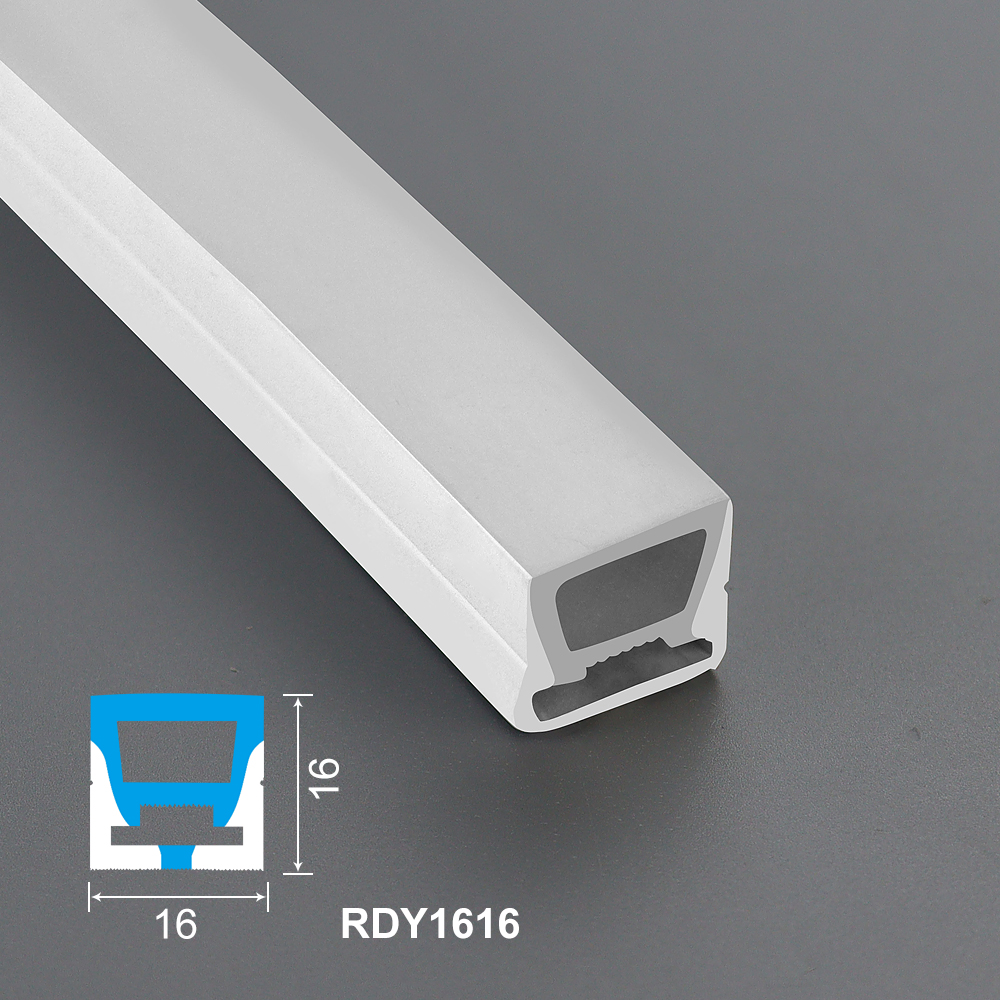
| RDY1616 | 16 × 16 mm | Square waterproof flexible silicone tube | Visible linear accents and surface-oriented installations |
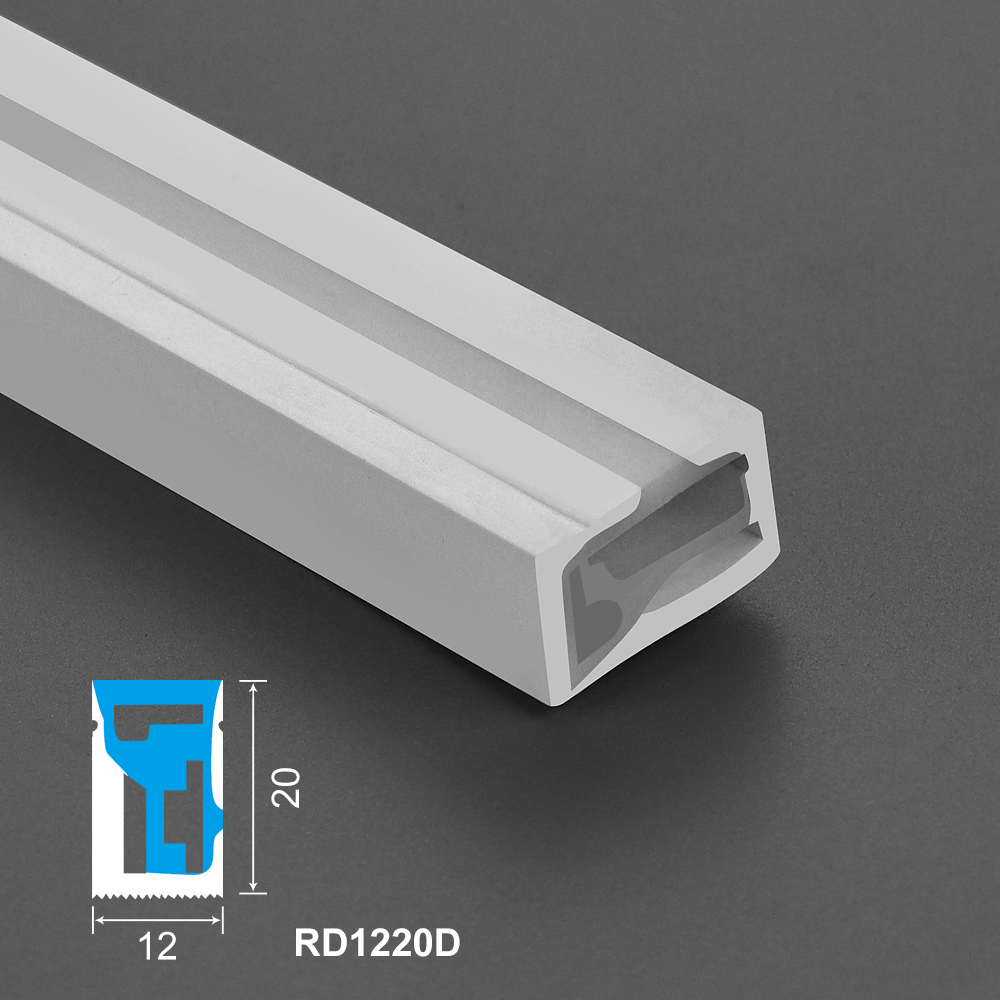
| RD-1220D | 12 × 20 mm | Embedded or surface-related silicone profile | Joinery, furniture and architectural linear lighting |
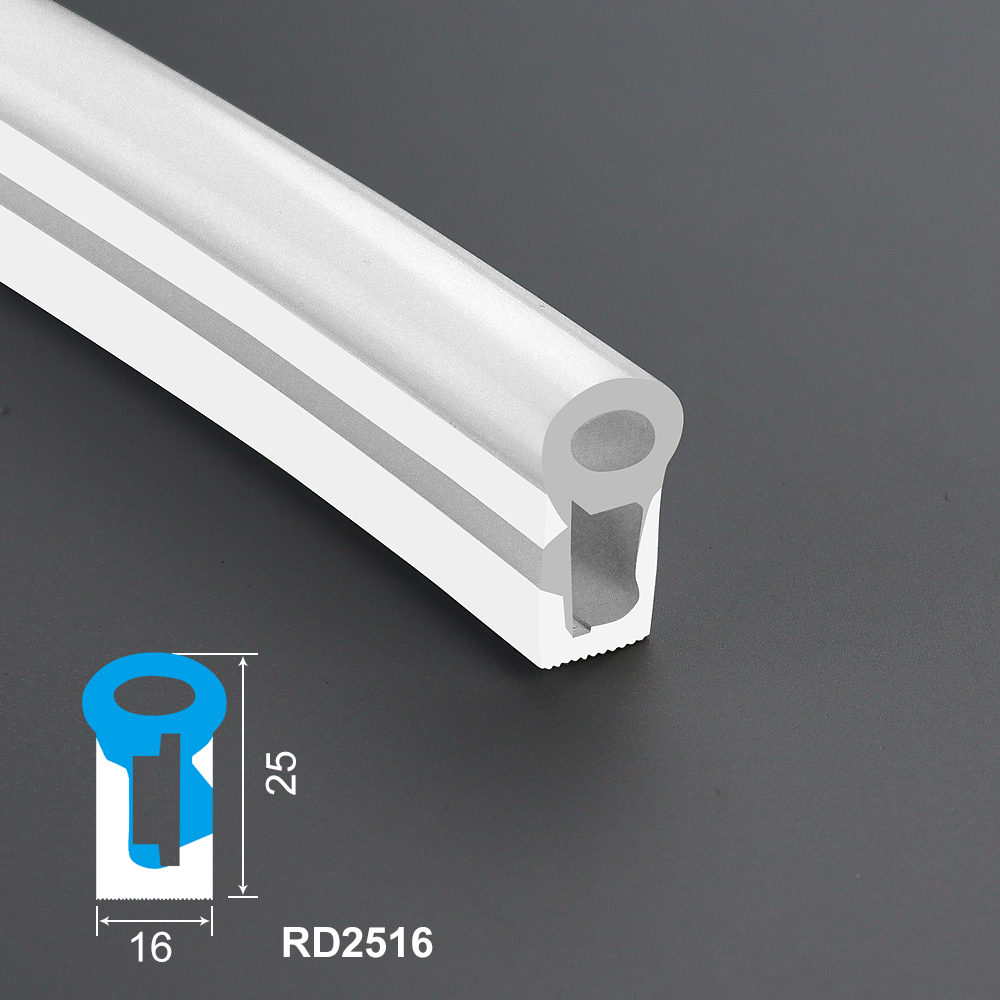
| RD-2516 | 25 × 16 mm | Wall-recessed profile with a rounded luminous edge | Integrated wall lines and recessed decorative details |
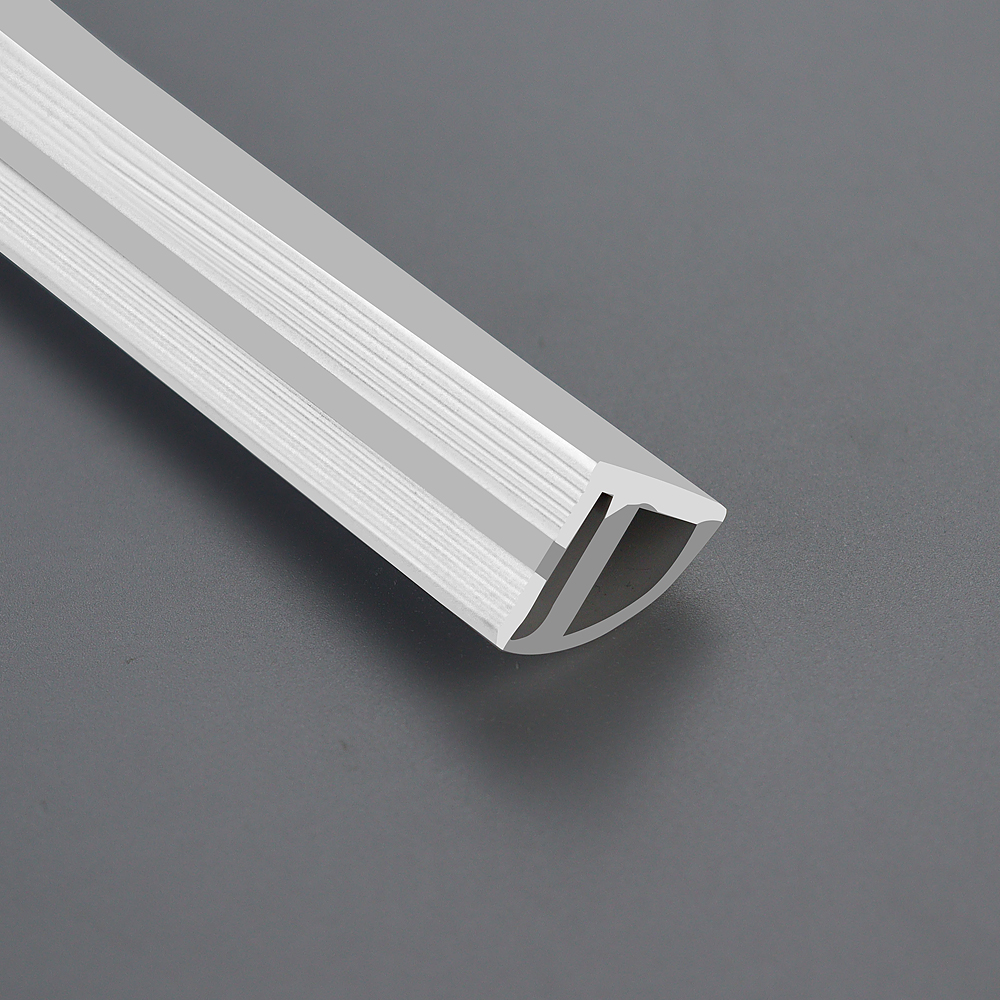
| RDS1616 | 16 × 16 mm | Corner-shaped silicone tube | Cabinet corners, wall junctions and angled display details |
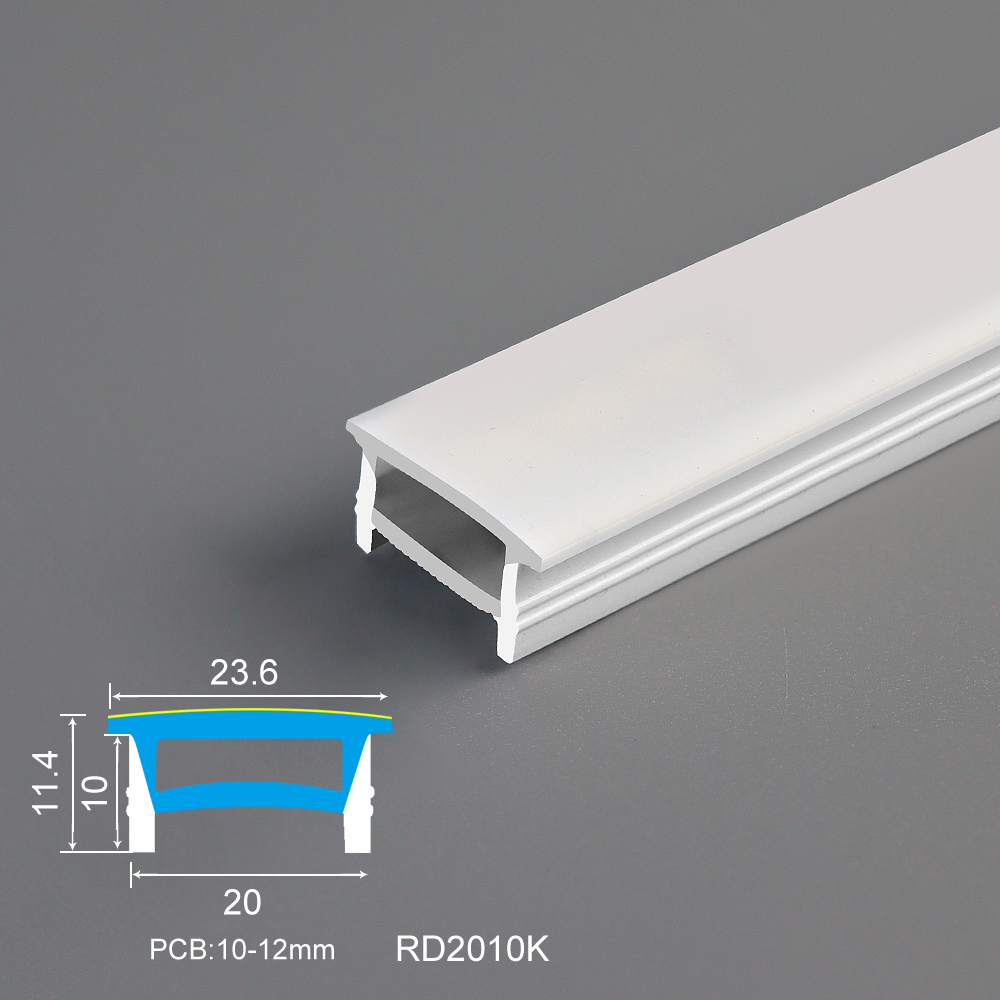
| RDS2010K | 20 × 10 mm | Low-profile tube shown for a regular LED strip | Wide, shallow luminous lines where installation depth is limited |
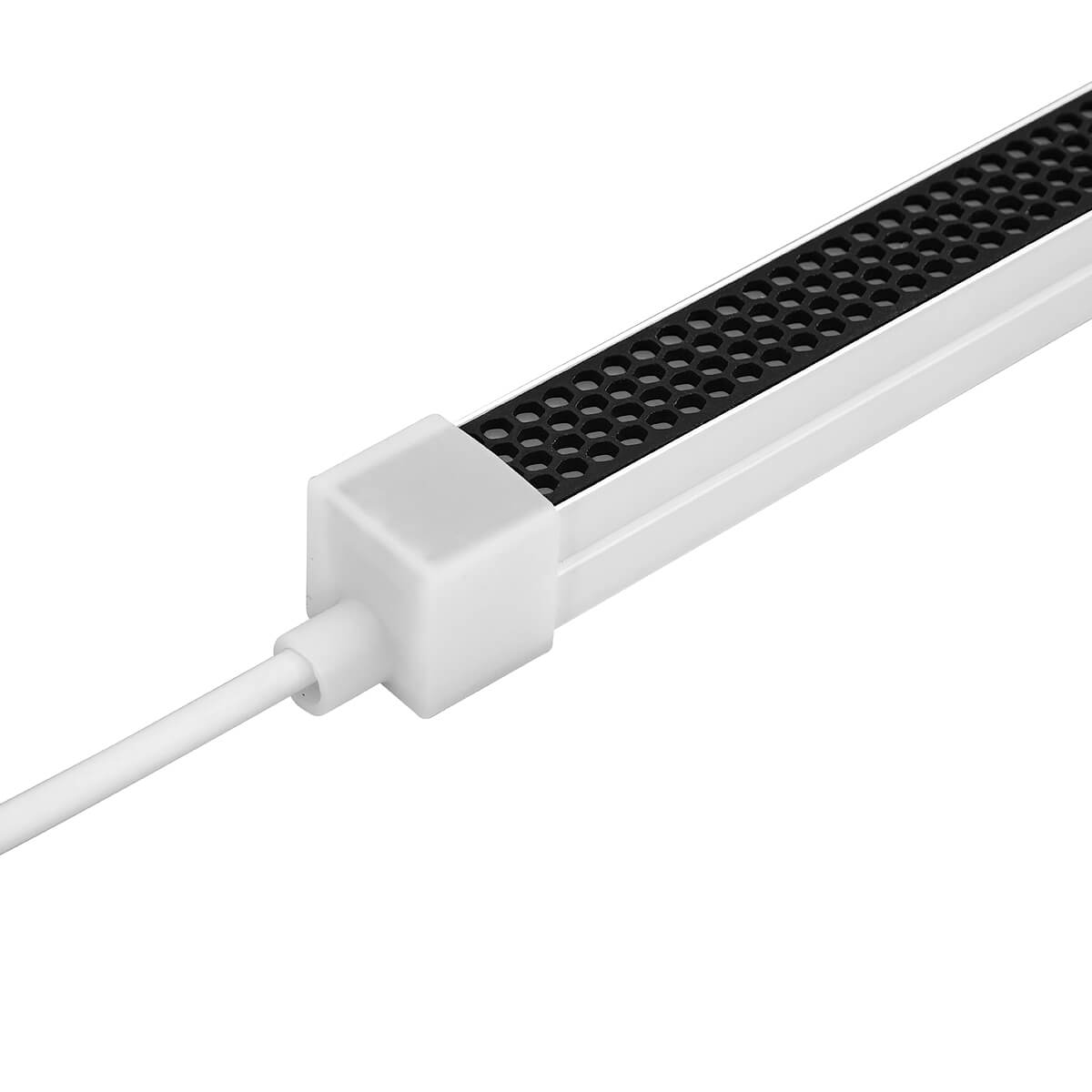
| RD-NN-AG1616 | Product page lists a 6 × 12 mm silicone tube | Anti-glare honeycomb linear neon | Indoor decorative lines where direct-view comfort matters |
Surface-mounted and square neon tubes
Square or rectangular profiles are practical when the luminous line is intended to remain visible as part of the design. The RDY1616 page shows a 16 × 16 mm silicone body, while the RD-1220D uses a 12 × 20 mm cross-section. These formats can be coordinated with clips, channels or other model-specific mounting accessories. The designer should decide whether the glowing face points upward, forward or sideways before confirming the profile orientation.
Embedded and wall-recessed neon profiles
Recessed profiles integrate the light line into a wall, panel or piece of furniture. The 12 × 20 mm RD-1220D has a shaped body that can support an embedded appearance, while the 25 × 16 mm RD-2516 is presented for wall-recessed lighting. Recess dimensions, fixing method, cable exit and access for maintenance should be coordinated before the wall or joinery is completed.
Corner profiles for angled installations
Standard rectangular neon is not always the best answer at a 90-degree junction. The 16 × 16 mm RDS1616 uses a corner-shaped body designed to fit an angled location. This can produce a cleaner transition along cabinets, shelves, display cases or architectural corners. The installer should confirm whether the profile emits light diagonally or across one face and how the cable and end cap will be concealed.
Anti-glare flexible neon
When a light line is installed within the normal field of view, brightness and glare can be as important as the decorative effect. SANAG's anti-glare product combines a silicone linear body with a honeycomb lens. Its page lists 12V or 24V operation, 120 LEDs per meter, 8W per meter and a 50-meter roll option for the specific model. Because the honeycomb changes the way light leaves the profile, buyers should request output and distribution data when the product must meet a calculated lighting level.
How to Select the Right Flexible Neon LED Tube
Selecting flexible silicone neon light tubes should begin with the installation drawing. The outline of the route, viewing direction and construction detail determine the correct profile more reliably than appearance alone.
- Define the luminous direction. Decide whether the light must face upward, outward, downward or diagonally from a corner. This determines the required cross-section and LED-strip orientation.
- Confirm the bending axis. State whether the route bends horizontally, vertically or in a single plane, and provide the smallest curve radius. Do not twist the product to imitate another bending direction.
- Check the available space. Compare the profile dimensions with the wall recess, groove, cabinet or mounting surface. Allow space for clips, channels, end caps and cable exits.
- Match the LED strip. Confirm PCB width, voltage, wattage, LED density, cutting increment, CCT, CRI and whether the strip is single-color, tunable white or RGB/RGBW.
- Control dot visibility. LED density, distance from the LEDs to the diffuser and silicone transmission all affect whether individual light points remain visible. Request an illuminated sample using the intended strip.
- Specify lengths accurately. Custom-cut assemblies must follow the LED strip's electrical cutting increments. Allow for connector and end-cap dimensions when calculating the visible light line.
- Confirm environmental protection. For wet or outdoor locations, request the model-specific IP rating, sealing method, cable-entry details and suitable driver. A silicone body alone does not automatically make every cut assembly waterproof.
- Plan installation and maintenance. Identify mounting clips, aluminum channels, adhesive requirements, driver access and how a failed section could be removed without damaging finished surfaces.
Where Flexible Neon Lighting Adds Value
Hotels, restaurants and hospitality interiors
Flexible neon can outline reception desks, bars, ceilings, wall panels and curved decorative features. A concealed or recessed profile creates a quiet architectural line, while a direct-view surface profile can become part of the visual identity. Warm color temperatures and smooth dimming are often useful in hospitality environments.
Retail displays and furniture
Cabinets, shelves and display fixtures often contain curves or corners that are difficult to illuminate with rigid profiles. A compact flexible neon LED light tube can follow the feature while diffusing the LED points. For merchandise applications, specify a suitable CRI and test the appearance of products under the final CCT.
Walls, ceilings and architectural details
Recessed neon can create luminous lines that guide movement or emphasize the geometry of a room. Coordinate expansion joints, corners, feeds and driver locations early. Long uninterrupted features should be divided according to electrical load, voltage-drop limits and the available cutting increments.
Outdoor and landscape features
Selected waterproof assemblies may be suitable for garden or exterior decorative lighting, depending on their confirmed rating and sealing. Outdoor specifications should address UV exposure, ambient temperature, drainage, submersion risk, connector protection and the IP rating of both the light and its power supply.
Preparing an OEM or Project Quotation
SANAG presents multiple silicone mould families and welcomes OEM/ODM inquiries. The category also contains RD16, RD21, RD25, RD33 and RD42 accessory pages, showing the importance of matching end treatments and installation components to the selected silicone family. Accessories should be included in the original bill of materials rather than chosen after the main product arrives.
For an accurate quotation from a custom flexible neon LED tube supplier, provide profile drawings or reference models, required lengths, total quantity, LED-strip specification, voltage, wattage, CCT, CRI, color-control type, cable length and exit direction, connector type, end caps, mounting accessories, IP requirement and destination market. Also state whether you need empty silicone tubes or complete illuminated assemblies.
Before volume production, approve a working sample for dimensions, surface finish, color consistency, bending performance and light uniformity. If the product will be recessed, test it inside the actual construction detail. If it will be used outdoors, inspect the completed cable entries and end seals rather than evaluating only the uncut extrusion.
Frequently Asked Questions
Do flexible neon tubes include the LED strip?
It depends on the selected product and quotation. Some requirements cover only a silicone tube for a compatible strip, while others cover a finished assembly with LEDs, wiring and sealed ends. Confirm the scope before ordering.
Can a flexible neon light bend in every direction?
No. Each profile has a designed bending axis and minimum bend radius. Bending in the wrong direction, twisting or forcing a tight radius may damage the strip and distort the illuminated surface.
Can flexible neon be cut to any length?
Finished assemblies must normally follow the cutting intervals of the installed LED strip. The final length also needs to accommodate cables, connectors and end caps. Ask the supplier to confirm cut increments for the exact configuration.
Are all silicone neon tubes waterproof?
No. Waterproof performance depends on the specific product and the completed sealing of cuts, cable exits, connectors and end caps. Request a model-specific IP rating and installation instructions for wet or outdoor locations.
How can visible LED dots be reduced?
Use a compatible profile and LED strip with suitable LED density, diffuser depth and cutting pitch. The most reliable method is to test an illuminated sample using the exact strip, brightness and dimming level planned for the project.
Create a Flexible Linear Lighting Solution
Explore SANAG's surface, recessed, corner, waterproof and anti-glare silicone neon options, then submit your drawings and LED requirements for model-specific recommendations.
 How a Bendable LED Aluminum Profile Brings Curved Lighting Ideas to Life
  About us
 SANAG BLOG
 faq
faq Contact us