


 Home
HomeHow an LED Stair Light System Brings Safer, Smarter Light to Every Step
 Sep 10,2026

 reddy
reddy
Quick answer: An LED Stair Light System uses low-voltage LED lighting to improve step visibility while becoming part of the staircase architecture. A recessed sequential system illuminates individual steps in response to movement, while an illuminated handrail produces continuous guidance and ambient wall washing. Choosing between them depends on the construction stage, desired control effect, number of steps, available power, mounting surface and customization requirements.
SANAG currently offers two distinct solutions in this category. The RD-SL1010 is a recessed, sensor-controlled step-lighting kit for up to 32 steps. The RD-SR is a surface-mounted aluminum handrail with double-sided up-and-down illumination. This guide compares both systems using their published specifications so architects, lighting designers, contractors, distributors and homeowners can plan a suitable installation.
What Is an LED Stair Light System?
An LED stair-lighting system is a coordinated set of luminaires, aluminum housings, controls, sensors, wiring and a compatible power supply designed specifically for a staircase. Unlike one general ceiling light, it places illumination close to the walking surface or handrail. This helps people distinguish tread edges, changes in level and the direction of travel while creating a more integrated architectural effect.
The two SANAG products address different lighting layers:
- Step-level guidance: RD-SL1010 places a slim recessed light at each step and triggers a chasing sequence from the direction of approach.
- Handrail and wall illumination: RD-SR integrates SMD2835 LED strips into an aluminum rail, casting light upward and downward along the wall.
Either approach can become the main visual feature of a villa, duplex, hotel corridor or entrance area. The best custom stair lighting system is selected around the actual staircase rather than treated as a decorative accessory at the end of construction.
Comparing SANAG Stair Lighting Solutions
| Feature | RD-SL1010 sequential step-light kit | RD-SR illuminated stair handrail |
|---|---|---|
| Lighting position | Recessed at individual steps | Integrated into a wall-mounted handrail |
| Primary effect | Sequential chasing illumination | Continuous up-and-down wall glow |
| Installation | Recessed embedded mount; 15 × 15 mm reserved groove | Surface/wall mounted without a recessed channel |
| Input voltage | DC12V–24V | DC24V |
| Control | Two embedded PIR sensors and stair controller | Continuous architectural lighting with matching external driver |
| Published capacity | Up to 32 steps and total power ≤500W | Power customized according to rail length |
| Customization | Adjustable speed, hold time and working modes | Custom length, RAL housing color, CCT and matching driver |
| Typical applications | Villas, duplexes and self-built houses | Villa stairs, duplexes, hotel corridors, hallways and entrance walls |
Choose RD-SL1010 when individual steps and motion-driven animation are central to the design. Choose RD-SR when the project needs a usable handrail, linear ambient light and a surface-mounted solution in one architectural element.
RD-SL1010 Creates Directional Sequential Step Lighting
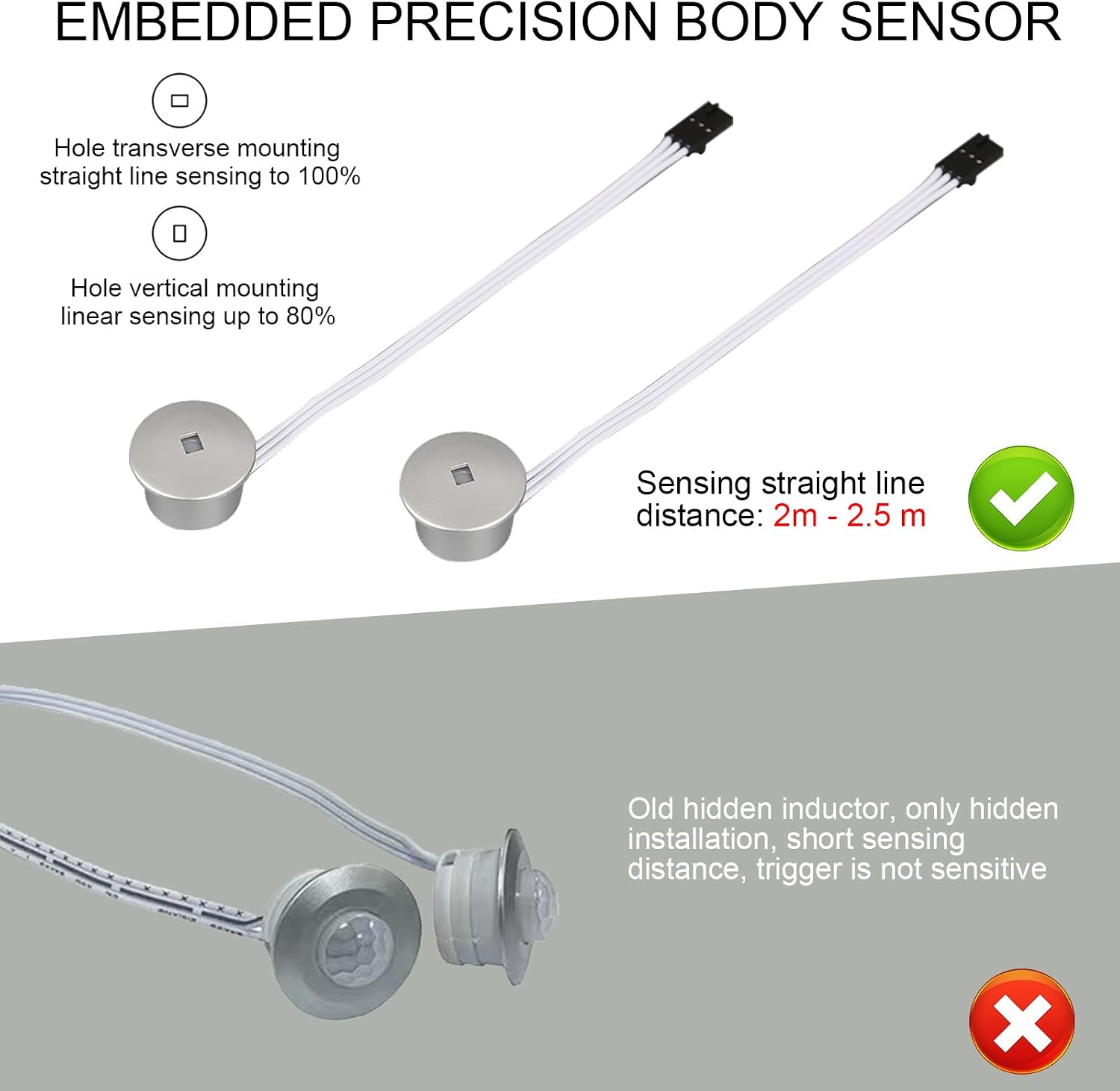
The RD-SL1010 smart motion sensor stair light kit uses two sensors: Sensor A is positioned at the lower approach and Sensor B at the upper approach. When movement is detected, the controller activates the steps one after another in the corresponding direction. The system then switches the lights off after the configured hold period. Lighting speed, hold-on time and working mode can be adjusted for different user experiences.
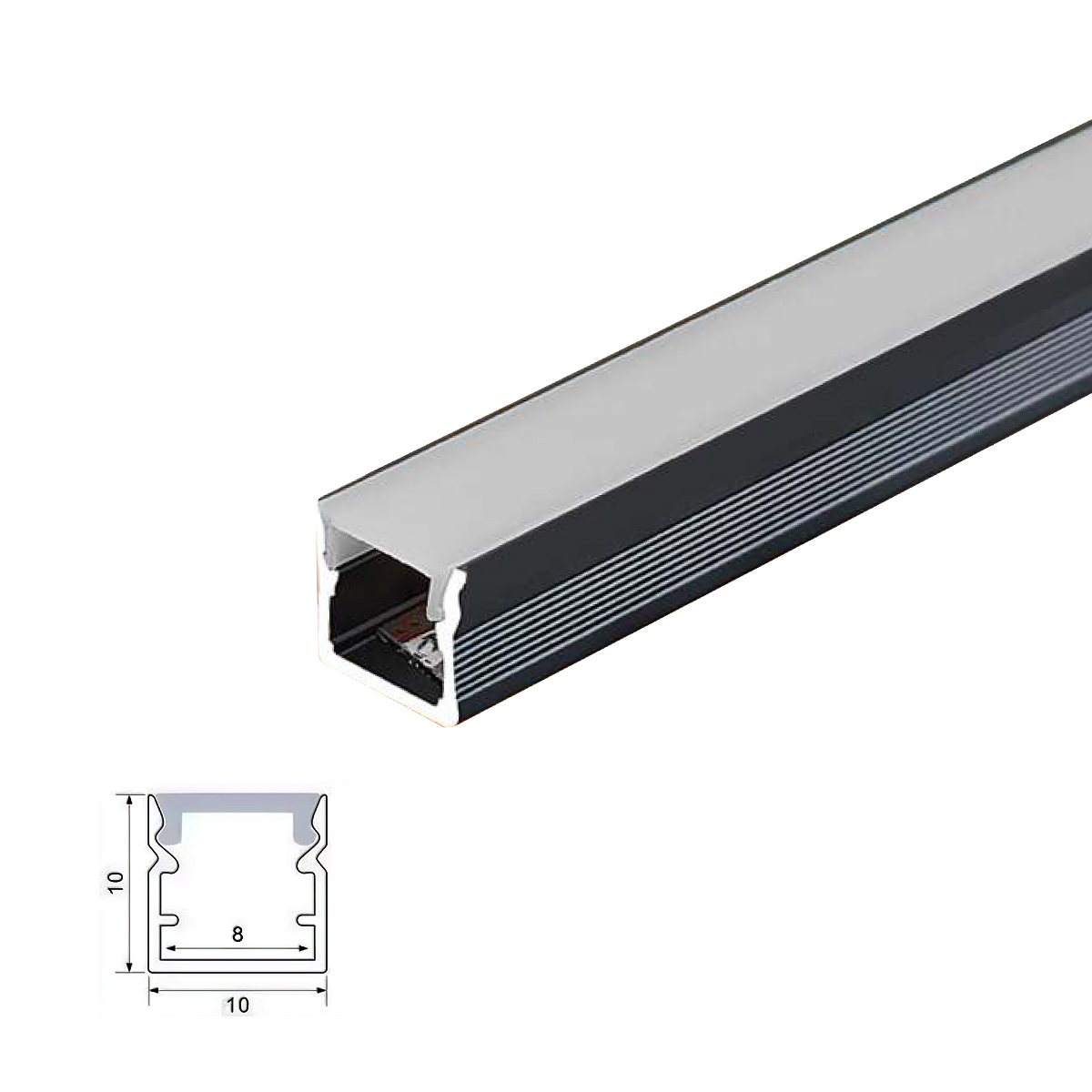
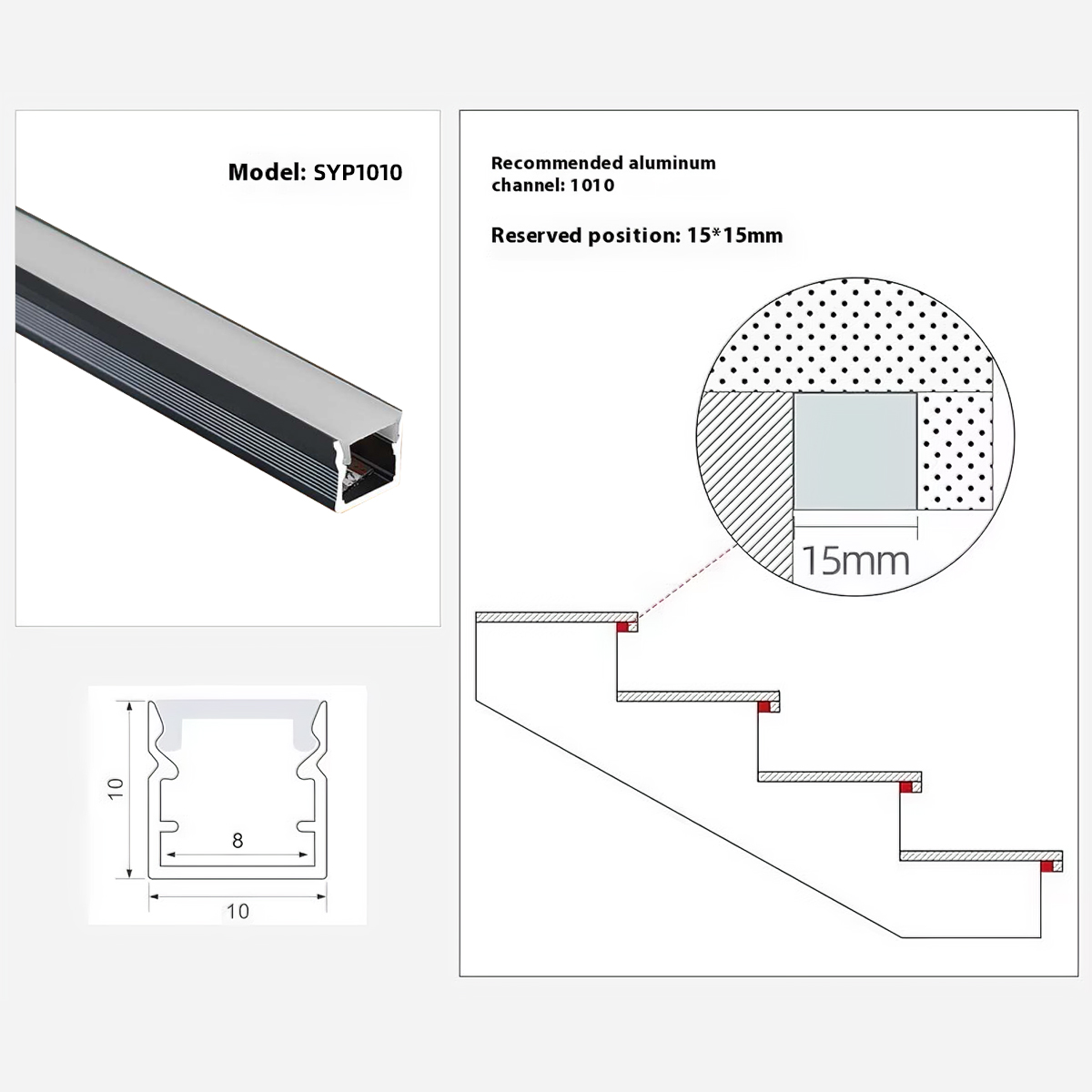
The supplied lighting profile is identified as a 10 × 10 mm aluminum channel, while the product page specifies a 15 × 15 mm reserved groove for recessed installation. This distinction matters during joinery, plaster or stone preparation. The installer should follow the final approved drawing rather than routing a groove from the nominal profile name alone.
Published RD-SL1010 Specifications
- Input: DC12V–24V low voltage
- Maximum number of steps: 32
- Maximum total power: ≤500W
- Sensor: Embedded PIR body sensor
- Published sensing distance: 2–2.5 meters
- Mounting: Recessed/embedded
- Kit contents: 1010 aluminum channels with LED strips, stair induction controller and human-body motion sensors
- Power supply: An external 12V/24V power supply is required and the adapter is not included
A smart stair lighting system needs more planning than a single fixture. Confirm the exact step count, wattage per step, controller location, sensor positions, cable routes, accessible power-supply location and switching logic before closing the staircase finishes. The product page recommends horizontal sensor-hole mounting for reliable detection and reduced false triggering.
RD-SR Combines a Stair Handrail with Up-and-Down Light
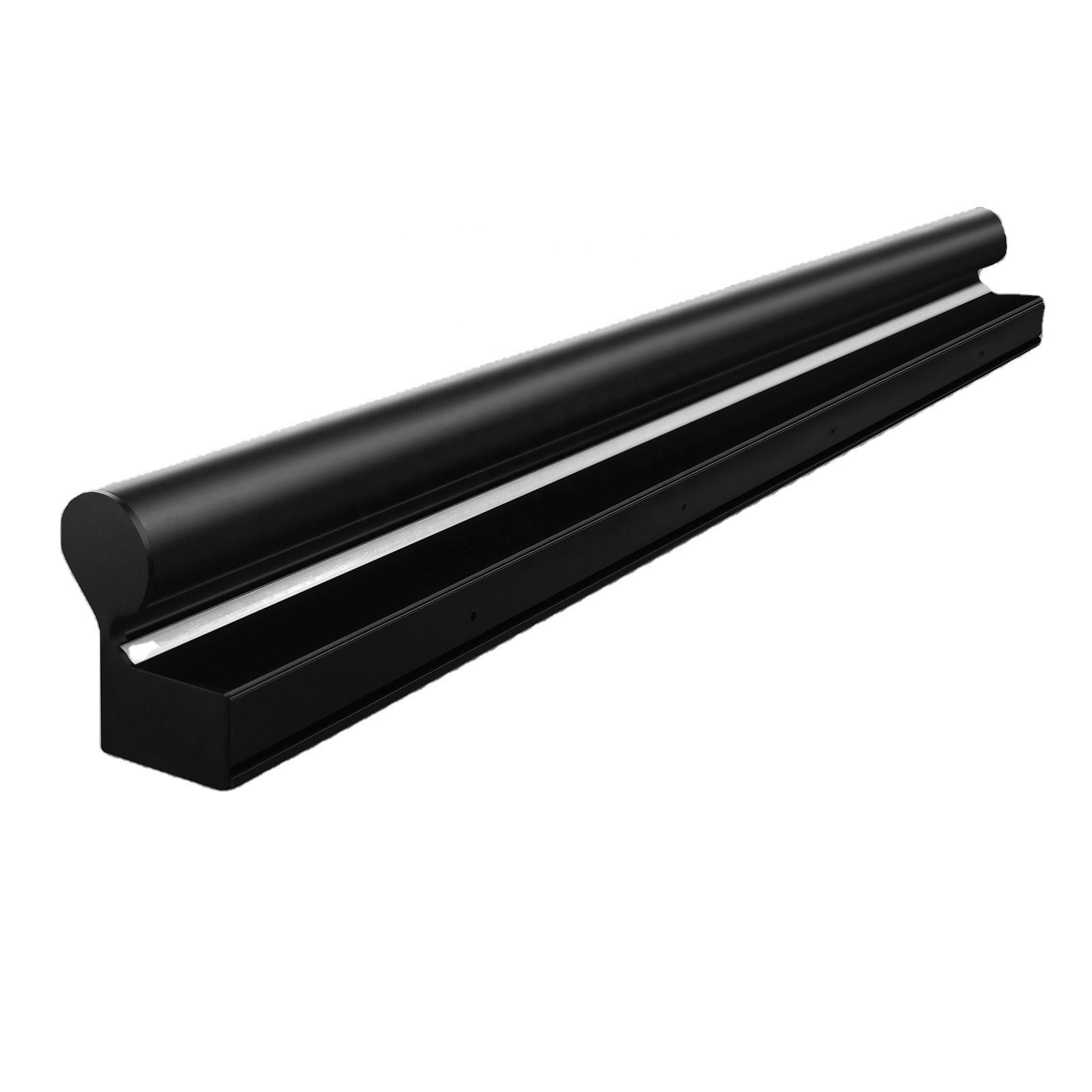
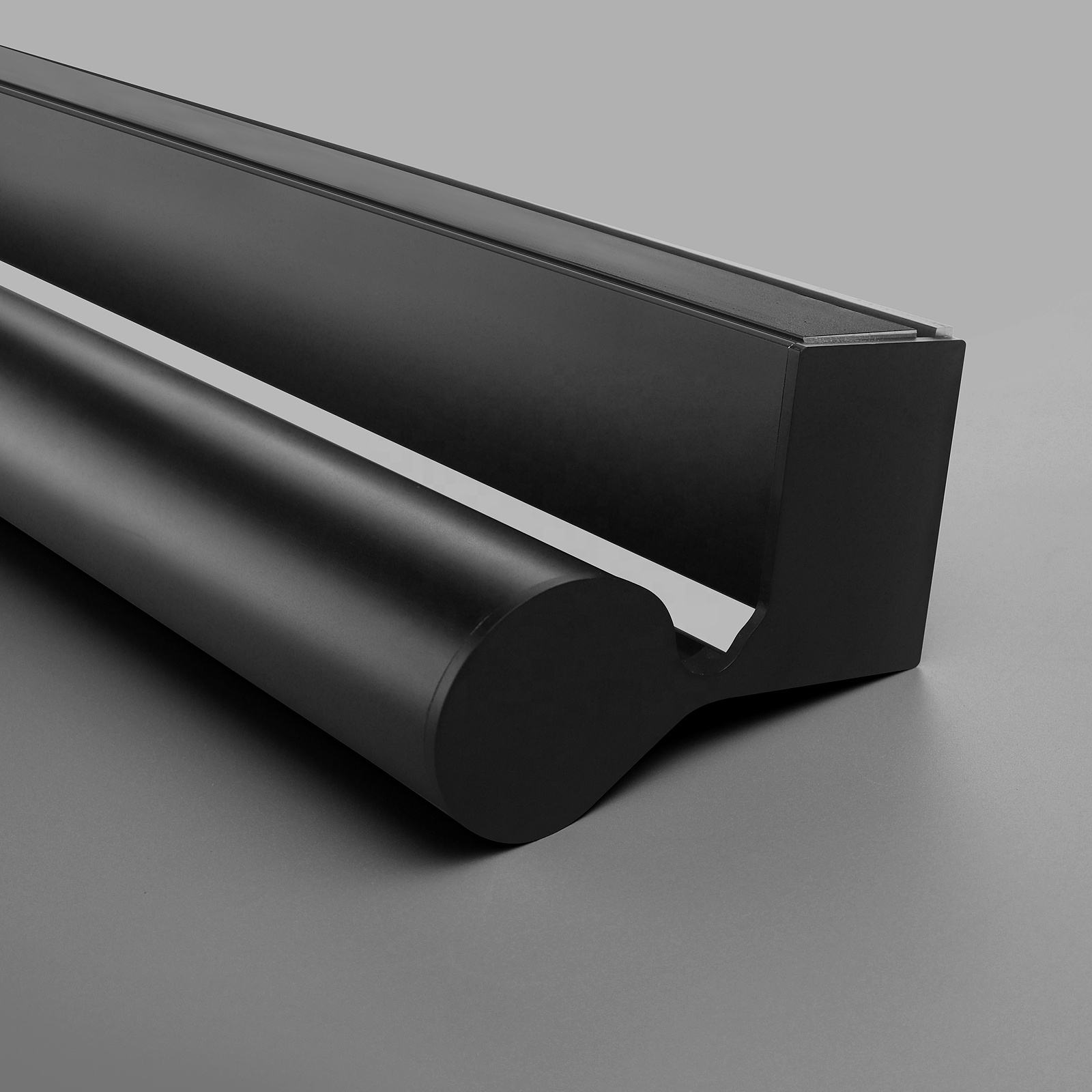
The RD-SR LED stair handrail light integrates two directions of illumination into a solid extruded-aluminum housing. One light line washes upward and the other casts light downward, allowing the rail to provide physical guidance, ambient illumination and a decorative wall effect at the same time.
Because RD-SR is surface mounted, it is especially relevant to renovations where cutting a recessed channel into the completed wall is undesirable. Its internal cable channel keeps wiring concealed, while the external driver remains available for maintenance. The rail length can be customized to follow the staircase slope, and the page lists matte black as the standard housing color with custom RAL colors available.
Published RD-SR Specifications
- Material: Integrated extruded aluminum
- Mounting: Surface/wall mounted
- Light emission: Double-sided upward and downward glow
- LED: SMD2835 LED strip
- Voltage: DC24V
- Color rendering: CRI Ra >90
- Color temperatures: 3000K, 4000K and 6000K
- Power: Customized according to length
- Customization: Rail length, housing color and matching LED driver
Warm 3000K light can complement timber and hospitality interiors, 4000K offers a neutral appearance for contemporary circulation areas, and 6000K produces a cooler visual tone. The specified Ra >90 helps materials and surface colors appear natural. Final brightness, rail dimensions, driver rating and control compatibility should be approved for the project configuration.
How to Select and Plan the Right Stair Lighting System
- Choose the lighting layer. Use recessed step lights for animated tread-by-tread guidance. Use an illuminated handrail for a continuous line of light and wall-washing effect.
- Identify the construction stage. RD-SL1010 requires reserved grooves and concealed wiring, so it is easiest to coordinate before finishes are installed. RD-SR is surface mounted and can suit both new projects and renovations.
- Measure the staircase. Record the number of steps, tread and riser dimensions, total rise, handrail slope, landing positions and cable distances. Do not estimate custom lengths from floor plans alone.
- Calculate electrical capacity. Confirm the connected wattage, selected voltage, cable size, voltage drop, controller capacity and driver headroom. RD-SL1010 supports a published maximum of 32 steps and ≤500W, but the actual supply still needs to match the installed load.
- Plan sensor behavior. Check upper and lower approach zones, sensor height, doors, landings and nearby circulation. A sample test can reveal blind spots or unwanted triggers before final installation.
- Coordinate controls. Define activation direction, chasing speed, hold time, dimming expectations and whether the lighting should operate continuously, automatically or with another building-control system.
- Confirm the finish and viewing comfort. Select CCT and housing color alongside wall, stair and handrail materials. Keep bright LED points outside normal sightlines and verify comfortable nighttime brightness.
- Review local requirements. Stair geometry, handrail dimensions, emergency lighting and electrical installation may be regulated. The project designer and licensed installer should verify applicable codes; decorative stair lighting should not be assumed to replace required emergency illumination.
Information to Include with a Custom Stair Lighting Inquiry
- Stair drawings, photographs and finished dimensions
- Number of steps and required illuminated length per step
- New construction or renovation status
- Preferred recessed step lighting or illuminated handrail system
- Input voltage, available driver location and cable routing
- Required color temperature, housing color and control behavior
- Sensor positions, detection direction and expected hold time
- Project quantity, destination and applicable compliance requirements
Clear drawings and operating requirements help SANAG match profiles, LED strips, controllers, sensors, drivers and wiring into one coordinated LED stair step lighting solution.
Frequently Asked Questions About LED Stair Lighting
What is the difference between RD-SL1010 and RD-SR?
RD-SL1010 is a recessed motion-sensor kit that activates individual step lights in sequence. RD-SR is a surface-mounted aluminum handrail that emits continuous light upward and downward. One emphasizes animated step guidance; the other combines a handrail with linear ambient lighting.
How many steps can the RD-SL1010 controller support?
The product page lists support for up to 32 steps and maximum total power of ≤500W. The final LED load, power supply, wiring and controller settings must still be calculated for the specific staircase.
How does sequential stair lighting detect travel direction?
RD-SL1010 uses one PIR sensor at the lower approach and another at the upper approach. The sensor that detects movement tells the controller which direction to start the step-by-step lighting sequence.
What groove is required for the RD-SL1010 profile?
The model uses a 10 × 10 mm aluminum channel, and its page specifies a 15 × 15 mm reserved groove. Installation dimensions should be checked against the approved product drawing before routing, plastering or stonework.
Can an LED stair handrail be installed during renovation?
RD-SR is designed for surface/wall mounting and does not require a recessed wall channel, making it suitable for many renovation projects. Power access, concealed cable routing, fixing strength and local handrail requirements must still be planned.
Can the handrail length and color be customized?
Yes. The RD-SR page lists custom rail length, custom RAL housing colors and a matching LED driver. Its available color temperatures are 3000K, 4000K and 6000K.
Is a power adapter included with the RD-SL1010 kit?
No. The published kit includes the aluminum channel with LED strip, stair controller and motion sensors, but an external DC12V or DC24V power supply is required and the adapter is not included.
Build the Lighting Around the Staircase
Share the stair drawings, step count, handrail dimensions, construction stage and preferred lighting behavior. SANAG can review the information and help identify the appropriate profiles, LED strips, sensors, controller and driver configuration.
 A Mini Magnetic Track Light System Brings Precision to Compact Displays
  About us
 SANAG BLOG
 faq
faq Contact us