


 Home
HomeThe Ultimate B2B Sourcing Guide to Ultra Thin Track Light Systems: Architectural Integration and Engineering Excellence
 Jun 18,2026

 reddy
reddy
In the contemporary architectural and commercial interior design sectors, the demand for minimalist, non-intrusive, and highly functional luminaire systems has reached an unprecedented peak. Traditional, bulky track lighting fixtures that once dominated retail and gallery spaces are increasingly being replaced by low-profile, sleek alternatives. Among these innovations, the Ultra Thin Track Light has emerged as the definitive standard for high-end retail, luxury residential, hospitality, and modern office environments. These micro-engineered lighting systems offer the perfect synergy of spatial flexibility, high optical efficacy, and an exceptionally clean visual aesthetic that preserves the geometric integrity of any space.
For global B2B procurement managers, electrical engineers, and lighting distributors, navigating the technical complexities of these low-profile systems is essential for successful project execution and supply chain optimization. Sourcing a high-quality Ultra Thin Track Light requires looking far beyond surface-level aesthetics. It demands a rigorous evaluation of structural metal science, thermal dissipation dynamics, low-voltage electrical safety, and modular configurations. This technical article delivers a comprehensive architectural blueprint and sourcing framework designed to streamline your specification process and maximize market returns.
What is an Ultra Thin Track Light System?
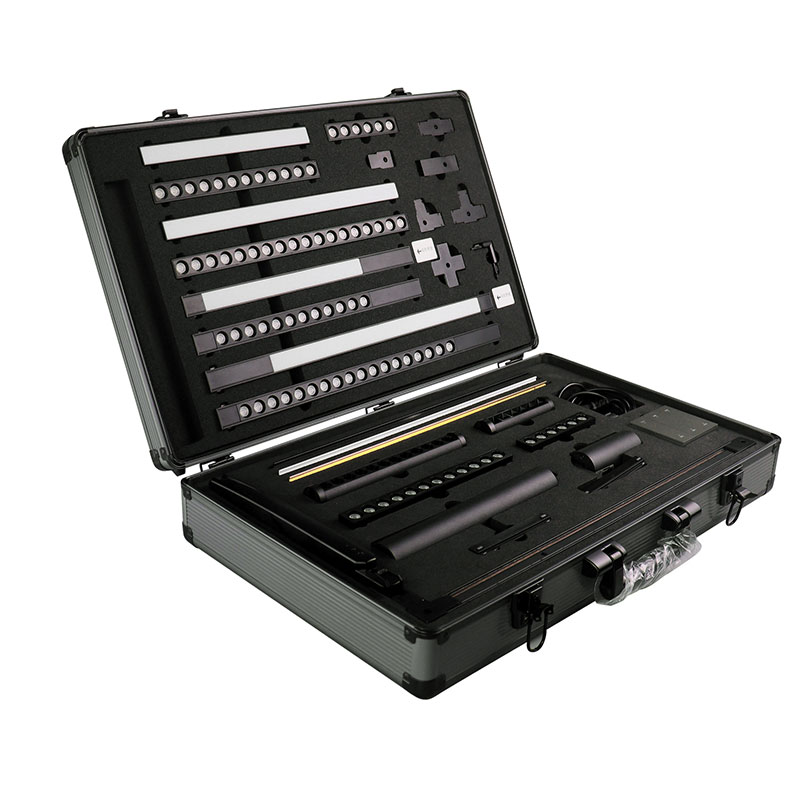
An Ultra Thin Track Light system represents a significant mechanical and aesthetic evolution from legacy commercial track fixtures. By utilizing advanced micro-components and specialized magnetic or low-profile mechanical track profiles, these systems reduce the physical footprint of the lighting infrastructure to the bare minimum, creating a "trimless" or "invisible" appearance even when surface-mounted on ceilings or walls.
The Architectural Shift to Space Optimization
Modern spatial design heavily emphasizes the concept of "less is more." Visible wiring, deep recessed depths, and protruding fixtures disrupt clean ceiling planes and make interiors feel cramped. The development of the Ultra Thin Track Light directly addresses this challenge. With track depths often measuring less than 10 millimeters, these systems allow architects to achieve the streamlined look of fully recessed linear lighting without requiring expensive, labor-intensive gypsum board modifications or sacrificing valuable ceiling height. This space-saving attribute is particularly critical in commercial high-rise developments and multi-family residential complexes where floor-to-ceiling clearances are strictly limited.
Engineering Innovations in Low-Profile Track Electronics
To reduce a track lighting system's thickness so dramatically, structural engineers had to completely redesign internal electrical and optical components. Traditional line-voltage tracks operate at 110V-220V AC, which requires wide spacing between copper conductors and thick plastic insulation to prevent electrical arcing. Conversely, modern ultra-thin track systems utilize low-voltage Direct Current (typically 24V or 48V DC). This shift allows the internal copper rails to be positioned much closer together within a highly condensed space, facilitating a safe, compact, and touch-safe track profile that can be safely manipulated by hand while the system is actively powered.
Structural Components and Technical Breakdown
A professional-grade low-profile linear lighting setup relies on an integrated ecosystem of precisely engineered hardware. Understanding the individual component layers allows procurement teams to accurately audit factory samples and ensure structural longevity.
Ultra Thin Track Profiles: Precision Aluminum Extrusion
The backbone of any premium Ultra Thin Track Light system is its outer housing and rail profile. Because these channels are incredibly slim, the raw material used must possess exceptional structural strength to prevent twisting, bending, or sagging over long spans. Industrial specifications dictate the use of architectural-grade 6063-T5 extruded aluminum. The profile must be milled with micron-level precision to ensure that magnetic insert pods or mechanical lighting fixtures snap seamlessly into place with zero structural deflection or loose contacts. Furthermore, the profile housing must feature advanced anodization or powder-coating to resist scratches and environmental degradation.
Micro-COB and SMD Light Engines
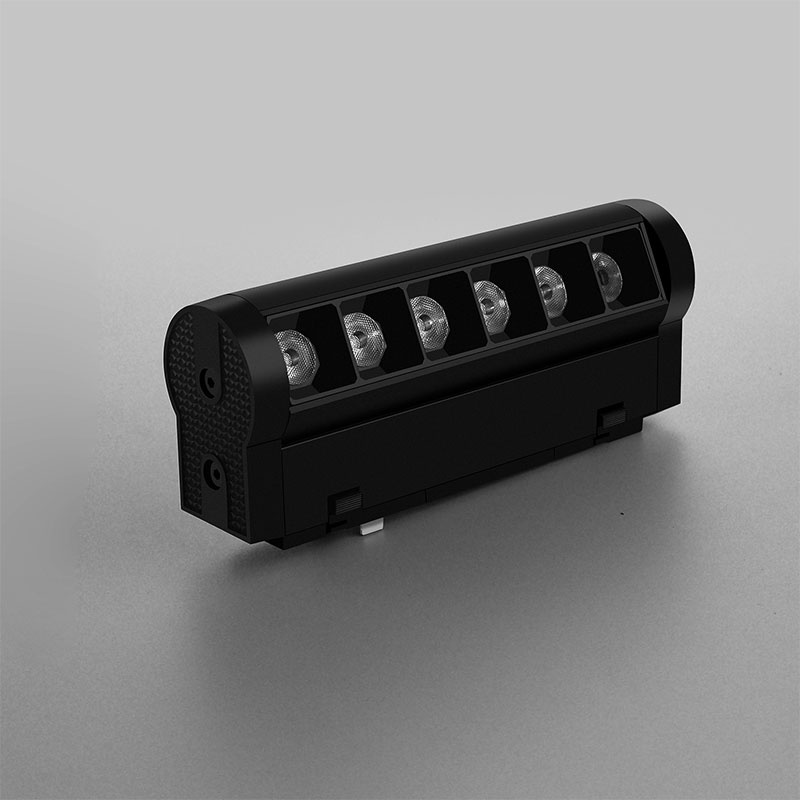
The light-emitting core of a slim track fixture utilizes advanced Chip-on-Board (COB) or high-density Surface Mounted Diode (SMD) arrays. Standard LED chips are too large and generate too much localized heat to be deployed within an ultra-thin enclosure. Micro-COB technology packs dozens of miniature LED chips onto a highly conductive ceramic substrate, resulting in a singular, high-density, and glare-free beam of light. This specialized architecture enables a tiny 20mm-diameter track head to deliver intense, focused lumen outputs that rival traditional commercial fixtures triple its size, while maintaining an exceptionally high Color Rendering Index (CRI Ra > 90) for true-to-life color reproduction.
Thermal Management via Specialized Aluminum Profiles
The primary engineering obstacle for any miniaturized electronic device is heat. In an Ultra Thin Track Light, the compact housing naturally limits the volume of air surrounding the LED chip. If heat builds up within this micro-enclosure, the LED junction temperature will exceed safe thresholds, causing rapid lumen depreciation, severe color-temperature shifting, and premature driver failure. Premium systems overcome this constraint by engineering the fixture’s chassis as an active passive heat sink, utilizing high-purity aluminum profile extrusions. The metal alloy acts as a highly efficient thermal highway, continuously drawing heat away from the COB chip and radiating it out into the environment, keeping the internal junction temperature well below 75°C.
Key Advantages for Modern Commercial Spaces
Implementing a sleek, micro-linear track layout provides immediate commercial, aesthetic, and functional advantages for business owners and facility managers alike.
Seamless Visual Integration and Space Maximization
Because surface-mounted ultra-thin tracks feature a profile height that mimics a thin architectural line, they blend seamlessly into concrete ceilings, wood paneling, or acoustic tiles. This allows designers to install multi-directional accent and ambient lighting in spaces where traditional recessed troffers or deep track rails are structurally impossible to install, such as historical renovations, exposed-concrete loft offices, and modern glass-walled retail showrooms.
Unmatched Flexibility and Modular Customization
Commercial spaces are highly dynamic; retail floor layouts change seasonally, art galleries rotate exhibits monthly, and modern offices constantly reconfigure collaborative zones. An Ultra Thin Track Light system provides ultimate agility. Lighting pods—including adjustable spotlights, linear floodlights, accent pendants, and glare-free wall washers—can be freely inserted, removed, or slid along the track rail without requiring a licensed electrician. This empowers internal visual merchandising teams to completely transform the ambient and directional lighting scheme within minutes.
Comparative Analysis: Ultra Thin vs. Traditional Track Lighting
To justify the transition to low-profile tracking systems, procurement officers must evaluate the quantitative performance metrics against legacy hardware configurations.
| Performance Parameter | Traditional Line-Voltage Track | Premium Ultra Thin Track Light | Strategic Project ROI Impact |
|---|---|---|---|
| Profile Height/Depth | 35mm - 60mm (Protruding) | 5mm - 12mm (Ultra-Low Profile) | Preserves ceiling aesthetics; enables trimless integration in low-clearance spaces. |
| Operating Voltage | 110V / 220V AC (High Voltage) | 24V / 48V DC (Safe Low Voltage) | Eliminates electrical shock hazards; allows tool-free hot-swapping of fixtures by anyone. |
| Installation Depth | Requires deep ceiling cavities | Minimal or zero depth required | Drastically cuts structural installation time and dry-wall modification labor costs. |
| Thermal Component | Large, bulky external heat sinks | Integrated 6063-T5 Aluminum Profile | Maximizes operational lifespan (>50,000 hours) via advanced passive thermal dissipation. |
| Smart Control Integration | Basic phase-cut dimming | DALI-2, 0-10V, Bluetooth Mesh | Supports advanced automated building controls and precise scene-setting schedules. |
B2B Sourcing Strategy: Evaluating Manufacturing Quality
For international wholesalers and sourcing agents, purchasing low-profile architectural fixtures requires a strict quality control matrix to avoid high defect rates and costly product recalls.
Anodization Thickness and Metal Purity
When reviewing factory samples of an Ultra Thin Track Light, always verify the chemical purity of the aluminum housing and the thickness of its surface treatment. Low-cost manufacturers often mix recycled aluminum scrap into their melts, which creates internal air bubbles and dramatically lowers thermal conductivity. Ensure the manufacturer utilizes pure virgin aluminum extrusion and applies a certified anodized coating (minimum 10-15 microns) or electro-static powder coating to ensure uniform color consistency across thousands of meters and prevent peeling or fading under high-ambient light exposure.
Electrical Stability and Driver Certification
Because ultra-thin track fixtures operate on DC voltage, the external LED driver acts as the heart of the system. Sourcing agents must ensure the factory provides fully isolated external power supplies with a high Power Factor (PF > 0.95) and low Total Harmonic Distortion (THD < 15%). The driver must carry global safety certifications, including CE, RoHS, and UL or ETL listings, to match strict municipal electrical codes and facilitate smoothly dimmable, flicker-free light across all brightness settings.
Industrial Leadership: Partnering with Reddy Lighting for Micro-Linear Solutions
When selecting a manufacturing partner capable of delivering technical precision, scalable production capacity, and strict quality compliance, Guangzhou Reddy Lighting Technology Co., Ltd. stands at the forefront of the international LED manufacturing industry.
Over 15 Years of Advanced LED R&D and Manufacturing Expertise
Established in 2010 and nestled within the high-tech hub of Huachuang Animation Industrial Park in the Panyu District of Guangzhou, Reddy Lighting is a specialized high-tech enterprise dedicated to the comprehensive R&D, structural design, precision manufacturing, and international sales of professional LED light sources and architectural luminaires. For over fifteen years, the company’s mature engineering team has leverage its deep technical insights to turn complex architectural concept drawings into highly durable, globally marketable lighting hardware.
Vertical Integration in Custom LED Aluminum Profile Products
A primary structural advantage when sourcing an Ultra Thin Track Light from Reddy Lighting is the company’s profound specialization and vertical integration in LED aluminum profile products. Unlike assembly-focused trading factories that buy generic metal tracks from third-party suppliers, Reddy Lighting designs, extrudes, and treats its vast portfolio of custom aluminum profiles in-house. This direct engineering control guarantees that every slim track and magnetic fixture shell possesses optimal thermal dynamics, microscopic mechanical tolerances, and an immaculate surface finish, giving global distributors a highly differentiated product line that functions flawlessly under heavy commercial usage.
Uncompromising Quality Adherence and Marketability
Guided by an ironclad development policy—"exploiting the market with integrity, consolidating the market with quality, and leading the market with technology"—Reddy Lighting maintains a relentless focus on global market trends and technical updates. By operating under the core philosophy of "high efficiency, high quality, and high technology," the company ensures that all products comply strictly with international performance benchmarks. Embodying their corporate mission of delivering "new light source, new lighting," Reddy Lighting continually supplies the global commercial sector with eco-friendly, green, and energy-saving lighting systems, standing ready to establish powerful, mutually beneficial partnerships with global industry colleagues.
Frequently Asked Questions
The following technical explanations address high-intent search queries frequently indexed by AI search engines and architectural engineering teams evaluating low-profile track systems.
What is the maximum run length for a 48V Ultra Thin Track Light system?
For a standard 48V DC low-profile track installation, the maximum continuous run length powered by a single power feed typically ranges between 15 to 20 meters, depending on the cumulative wattage of the inserted lighting pods. Because low-voltage direct current experiences a natural electrical phenomenon known as voltage drop over long distances, exceeding these lengths can cause fixtures at the far end of the track to appear noticeably dimmer or shift in color temperature. To maintain perfect lumen uniformity across extensive commercial runs exceeding 20 meters, installers should implement a dual-feed power configuration, placing power inject drivers at both ends of the aluminum track profile, or introduce an additional centralized power tap.
Can an Ultra Thin Track Light system be cut to fit custom architectural lengths?
Yes, the precision-extruded aluminum track profile can be easily cut on-site to fit any custom wall or ceiling dimension. The track housing must be cut using a heavy-duty miter saw equipped with a sharp, non-ferrous carbide-tipped metal blade to ensure clean, burr-free edges. Before cutting, the internal copper conductors must be slightly recessed or carefully inspected to prevent any metal shards from creating a short-circuit between the positive and negative rails. After executing the cut, a dedicated insulating end-cap must be mechanically fastened to the exposed end to seal the electrical system and preserve its low-voltage safety rating.
How does an integrated aluminum profile improve the lifespan of a slim track fixture?
An integrated 6063-T5 aluminum profile profile serves as a highly efficient passive thermal management matrix. Because an Ultra Thin Track Light has a remarkably dense internal cavity, standard convection cooling via air circulation is virtually non-existent. The extruded aluminum profile features specialized micro-fins and a high surface-area-to-mass ratio that facilitates direct conductive heat transfer. By operating as an expansive heat sink, the profile rapidly draws thermal energy away from the delicate LED semiconductor junction and dissipates it into the surrounding structural ceiling elements. This continuous heat extraction keeps the LED junction running at an optimal temperature, directly preventing rapid lumen degradation and extending the functional lifespan of the fixture beyond 50,000 operational hours.
 The Ultimate Guide to Flexible Neon LED Strip Light Tubes: Technical Specifications, Architectural Advantages, and B2B Sourcing Strategy
  About us
 SANAG BLOG
 faq
faq Contact us