


 Home
HomeAnti-Glare LED Aluminum Profiles: A Buyer's Guide
 Aug 14,2026

 reddy
reddy
Glare-free linear lighting is not created by a diffuser alone. It is the result of a complete optical system in which the LED source, aluminum profile depth, lens pattern, installation position and viewing angle all work together. For architects, lighting contractors, furniture manufacturers and distributors, understanding these relationships is essential when specifying an anti-glare LED aluminum profile for offices, retail displays, hospitality interiors or residential projects.
This guide explains how textured PC covers control brightness, why some linear lights still show LED dots, what to request from a supplier and how to select a profile that balances visual comfort with usable light output.
What Is an Anti-Glare LED Aluminum Profile?
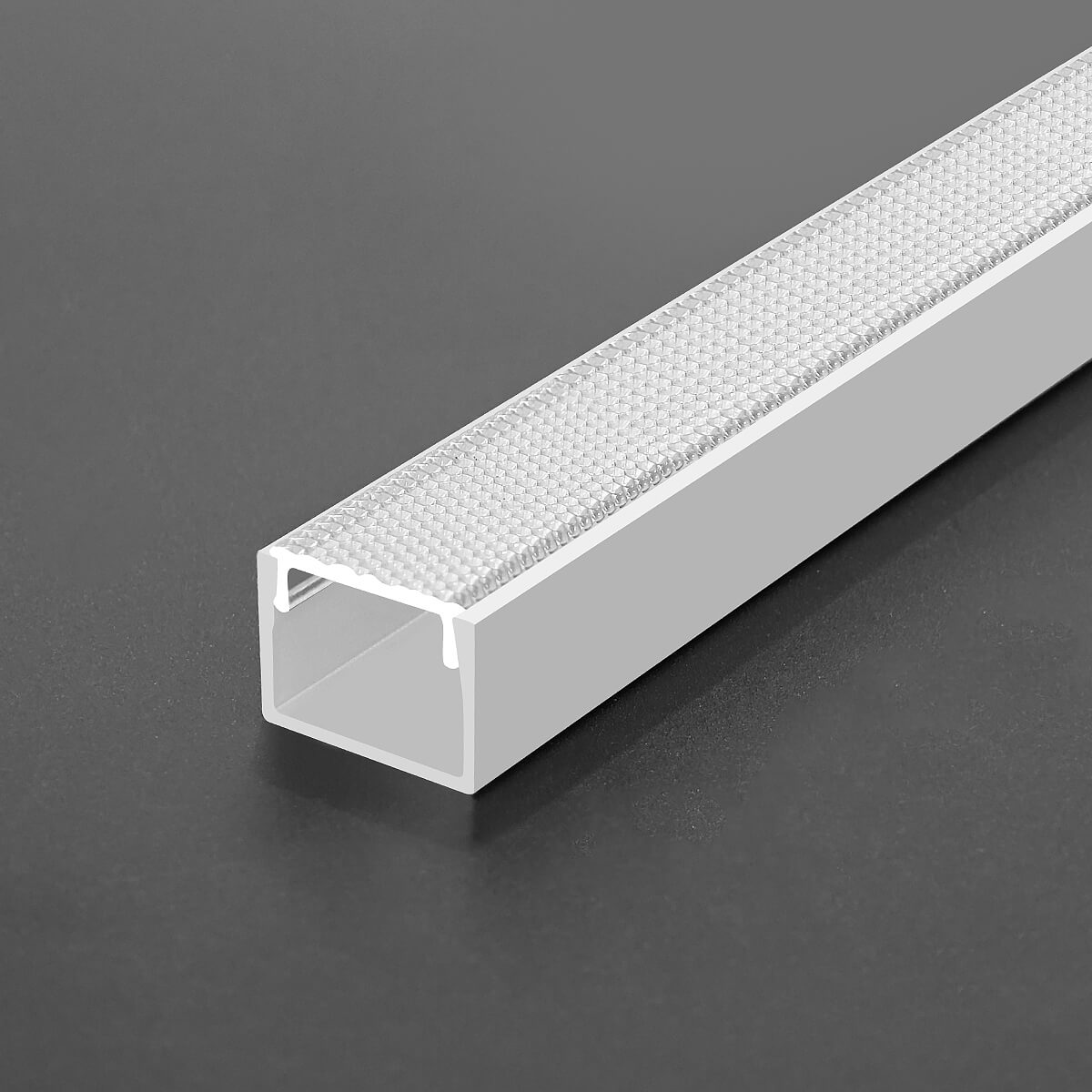
An anti-glare LED aluminum profile is a linear channel designed to house an LED strip while controlling the brightness visible from normal viewing positions. Like standard LED aluminum profiles, it provides mechanical protection, a clean architectural finish and a metal path that helps transfer heat away from the LED PCB. The difference is in the optical design.
Instead of relying only on a smooth clear or milky lens, an anti-glare profile may use a micro-textured, prismatic, patterned or honeycomb surface. These structures redirect and scatter light before it reaches the viewer. The goal is not simply to make the fixture dimmer. A well-designed system reduces uncomfortable high-angle brightness while delivering useful illumination onto a desk, shelf, wall or merchandise display.
It is also important to distinguish between reduced glare and a verified UGR value. Unified Glare Rating depends on the complete luminaire, its photometric distribution, room dimensions, surface reflectance, mounting height and observer position. If a project requires a specific UGR target, buyers should request suitable photometric data and evaluate the installed layout rather than assuming that any diffuser automatically guarantees the result.
How Does a Textured PC Diffuser Reduce Glare?
A bare LED strip contains many small, intense light sources. When they are directly visible, the contrast between each bright diode and the darker surrounding area can cause visual discomfort. A textured polycarbonate cover manages this output in three ways:
- Light scattering: the surface pattern breaks up concentrated rays and distributes them across a wider luminous area.
- Source shielding: the lens and profile geometry reduce direct views of the individual LEDs at common viewing angles.
- Brightness transition: the optical texture creates a softer change between the luminous line and its surroundings, making the fixture feel less harsh.
Polycarbonate is widely used for profile covers because it combines impact resistance, low weight and the ability to form detailed optical textures. However, the cover must be matched to the channel. Lens transmission, pattern, profile depth and LED-strip output should be evaluated as one system. A highly diffusing cover can improve uniformity but may also reduce delivered lumens; a shallow channel with widely spaced LEDs may still show hotspots even when a frosted cover is installed.
LED Profile Diffuser Comparison
| Optical cover | Main advantage | Trade-off | Typical use |
|---|---|---|---|
| Clear | High light transmission | LED points are usually visible; limited glare control | Concealed coves and indirect lighting |
| Opal or frosted | Smooth appearance and good source concealment | Some lumen loss; performance varies by material and thickness | Cabinets, shelves and general architectural lines |
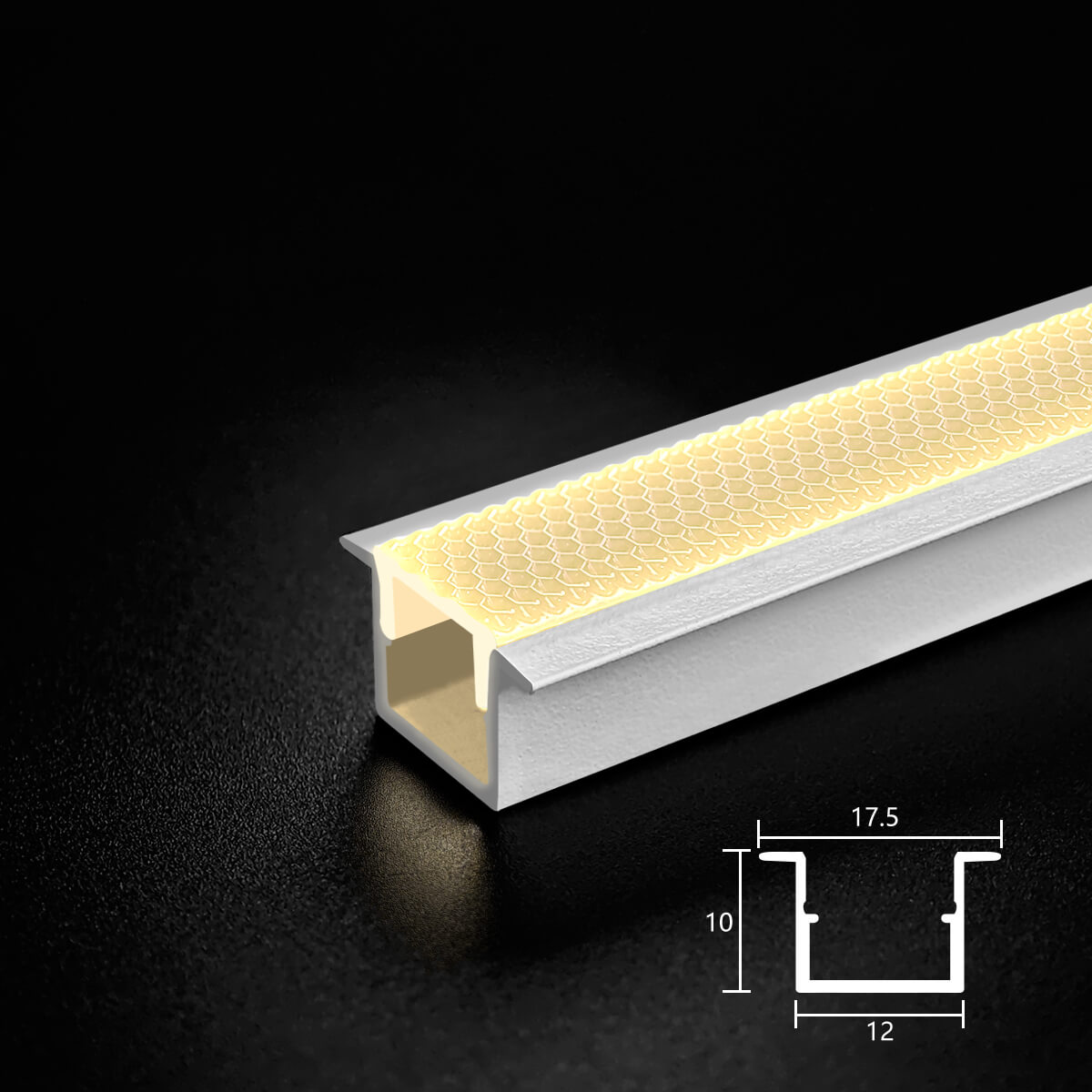
| Textured or prismatic PC | Better directional control and reduced perceived glare | Optical pattern remains visible when the light is off | Workspaces, retail displays and visible surface-mounted lines |
| Honeycomb or louver | Strong shielding at high viewing angles | Narrower distribution and potentially lower total output | Task lighting, hospitality accents and decorative neon |
There is no universal best diffuser. For hidden cove lighting, high transmission may matter more than source shielding. For a visible channel above a workstation, a textured or micro-prismatic cover may provide a better balance. For a low-mounted source that can be seen from the side, a deeper profile or honeycomb structure may be more effective.
How to Create Dot-Free Linear Lighting
Glare control and dot-free output are related, but they are not identical. Glare concerns excessive brightness in the viewer's field of vision. Dot-free lighting concerns whether individual LED points can be distinguished through the cover. To improve both, evaluate the following variables before placing an order.
1. LED Density
A strip with closer LED spacing is easier to blend into a continuous line. COB strips can be useful where a very smooth appearance is required, but their wattage, PCB width, voltage and thermal load must still match the profile.
2. Distance Between the LEDs and Diffuser
A deeper optical chamber gives light more distance to mix before reaching the lens. Very shallow profiles save space, but they normally require a higher-density source or a more diffusing cover to hide points.
3. Internal Channel Width
The LED strip must fit flat against the aluminum base without bending or contacting the diffuser. Buyers should confirm the usable internal width, not only the outside dimensions of the profile.
4. Lens Transmission and Pattern
More diffusion generally improves visual uniformity, but excessive diffusion can reduce useful output. Ask the supplier to test the proposed LED strip and cover together, particularly when uniformity and illuminance targets are both critical.
5. Surface Finish and Installation Angle
Polished stone, glass, glossy desks and mirrors can reveal bright reflections that are not obvious in a product photo. The final mounting angle should direct high-intensity light away from normal sightlines and reflective surfaces.
Choosing an Anti-Glare Profile by Application
Office and Education Lighting
Visual comfort, uniformity and flicker performance should be prioritized. For direct illumination above desks or meeting tables, review the full luminaire photometric report and driver compatibility. A textured lens can be a useful component, while complete LED linear light fixtures may simplify sourcing when the project requires a tested, ready-to-install system.
Retail Shelves and Display Cabinets
Compact dimensions, high color quality and hidden installation are often more important than maximum output. Choose a profile that fits the furniture groove, keeps the LED PCB cool and prevents the light source from reflecting directly in glass. A high-density strip and controlled diffuser can create a premium continuous line without distracting from the merchandise.
Hotels, Restaurants and Residential Interiors
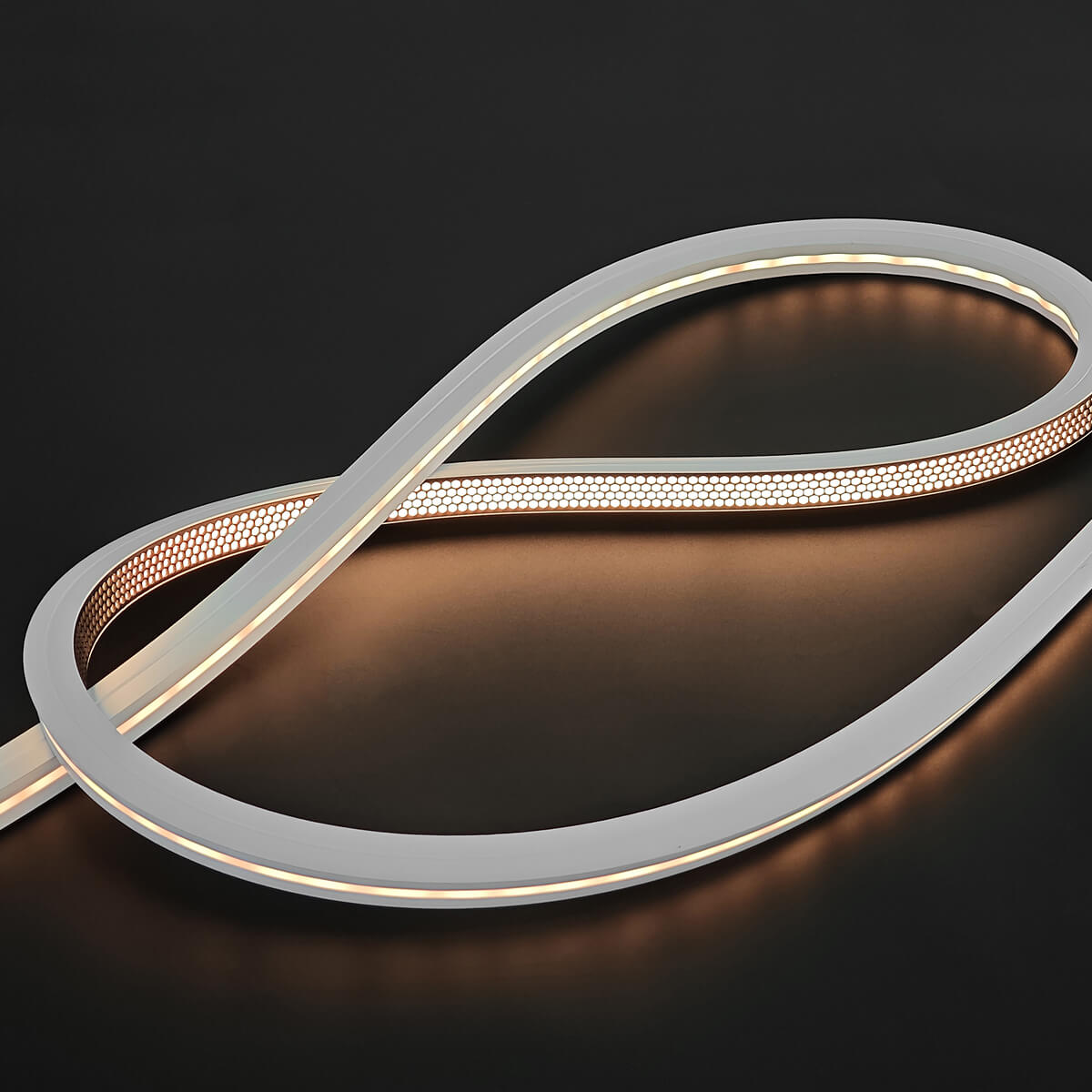
Warm color temperatures, dimming quality and low-angle shielding help create comfortable ambient light. Visible surface lines can use a patterned cover, while curved features may benefit from an anti-glare flexible neon light with a honeycomb lens.
Wall, Ceiling and Architectural Details
Choose the mounting format first: recessed for a flush light line, surface-mounted for fast installation, pendant for an independent fixture or bendable for curved geometry. The complete range of surface-mounted LED strip profiles is a practical starting point for projects where cutting a recessed groove is not possible.
B2B Specification Checklist for Anti-Glare LED Profiles
Before requesting samples or pricing, provide the supplier with a complete project brief. This reduces repeated communication and helps ensure that the sample represents the final installation.
- Installation method: recessed, surface-mounted, suspended or integrated into furniture
- Required finished length and acceptable cutting tolerance
- Maximum external dimensions and minimum usable internal width
- LED type, PCB width, voltage, watts per meter and LED density
- Target color temperature, CRI and lumen output
- Diffuser type and required balance between uniformity and transmission
- Normal viewing direction and mounting height
- Driver and dimming protocol, such as on/off, 0-10V, DALI or another project standard
- Environment and ingress protection requirement
- Finish color, end caps, mounting clips, connectors and cable entry position
- Required compliance documents, test reports, packaging and labeling
For custom commercial orders, ask for an assembled sample using the intended LED strip rather than evaluating an empty extrusion. View the sample from the same height and angle expected on site, both when switched on and off. If glare or uniformity is a contractual requirement, request the applicable photometric and quality documentation. Reddy Lighting's quality-control process and technical team can support specification review for project-based sourcing.
Why Source the Profile, Diffuser and Light Engine as a System?
Buying the aluminum channel, lens and LED strip from unrelated sources may appear flexible, but small compatibility differences can create field problems. A cover that does not lock securely may expand, bow or detach. An LED strip that is too wide may not contact the aluminum base correctly. A lens selected only for appearance may reduce output below the project target.
System-based sourcing makes it easier to coordinate mechanical fit, thermal performance, optical appearance and accessories. SANAG's RD-22B textured-cover profile and RD-1210A ultra-uniform LED profile provide two compact starting points for projects that prioritize a controlled, comfortable light line. Custom dimensions, finishes and assembled lighting solutions can then be discussed according to project volume.
Frequently Asked Questions
Does a frosted diffuser eliminate LED dots?
Not always. Dot visibility depends on the diffuser, LED spacing and distance between the LEDs and lens. A shallow profile with a low-density strip can still show hotspots. Test the intended strip and profile together.
Is a textured PC cover better than an opal cover?
It depends on the application. An opal cover is effective for general source concealment, while a textured cover can provide more deliberate light control and reduce perceived brightness at specific viewing angles. Compare samples using the same LED source.
Can an anti-glare LED profile guarantee UGR < 19?
A component alone cannot guarantee the UGR of every installation. UGR is influenced by luminaire photometry, room geometry, surface reflectance, mounting position and observer location. Confirm the target with project-specific photometric data.
Which profile is best for a visible linear light?
A deeper channel with a high-density LED source and a textured, micro-prismatic or opal lens generally produces a more comfortable visible line. The correct choice still depends on required brightness, mounting height and viewing direction.
Can Reddy Lighting customize anti-glare profiles?
Reddy Lighting supports project-based LED profile and lighting solutions. Provide drawings, dimensions, LED specifications, finish, quantity and compliance requirements so the team can assess the appropriate standard or customized option.
Request an Anti-Glare LED Profile Sample
Send your profile dimensions, LED-strip specification, application, target quantity and project drawings to the Reddy Lighting team. We can help you compare optical covers and select a system for uniform, visually comfortable linear lighting.
 How Custom LED Aluminum Profiles Turn Lighting Ideas into Buildable Systems
  About us
 SANAG BLOG
 faq
faq Contact us