


 Home
HomeHow Custom LED Aluminum Profiles Turn Lighting Ideas into Buildable Systems
 Aug 15,2026

 reddy
reddy
Architectural lighting concepts often begin with a simple request: create a clean line of light that fits the space perfectly. Turning that request into a reliable product requires much more than choosing an aluminum channel from a catalog. The profile geometry, LED strip, diffuser, mounting method, finish, accessories and installation environment must work as one system.
That is why architects, lighting designers, furniture manufacturers, contractors and distributors increasingly specify Custom LED Aluminum Profiles. A properly engineered profile can follow a curved ceiling, disappear into plaster, fit a narrow cabinet groove, support a large pendant fixture or protect a linear light outdoors. This guide explains what can be customized, how to prepare a useful project brief and how to select the right profile architecture before requesting samples.
Why Standard LED Channels Do Not Fit Every Project
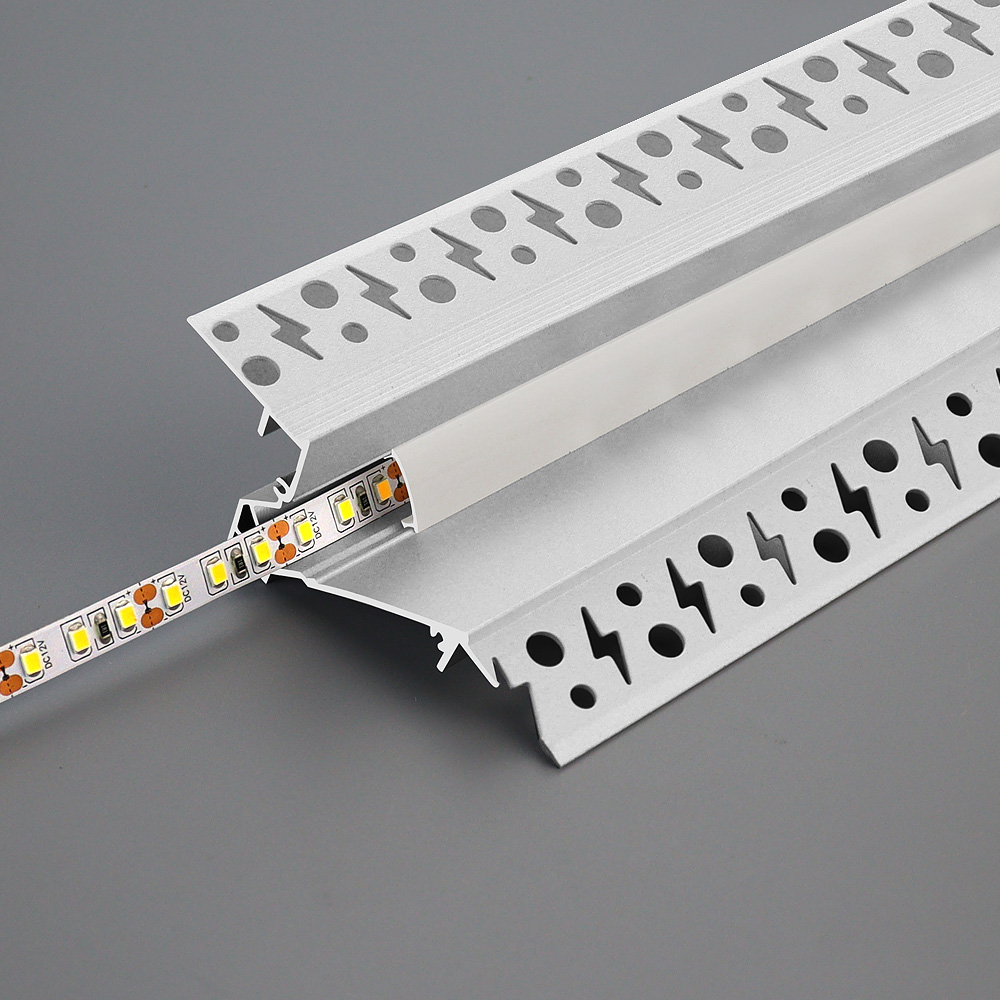
A standard channel works when the available space, mounting surface, LED width and desired light effect already match an existing design. Many commercial projects have tighter constraints. A cabinet manufacturer may need a 10 mm recessed light that sits flush with a routed groove. An interior designer may want an uninterrupted curve across a ceiling. A contractor may need a wall-skimming channel that conceals rough plaster edges. A pendant fixture may require enough internal volume for a high-output light engine and suspension hardware.
In these situations, custom aluminum LED profiles make the lighting system conform to the building or product instead of forcing the design to conform to a generic extrusion. Customization can also reduce on-site modification, improve accessory fit and give a product family a consistent visual identity.
The objective is not to customize every component unnecessarily. The best result is usually the simplest proven structure that satisfies the mechanical, optical and environmental requirements. An experienced manufacturer should first compare the brief with existing moulds, then recommend a modified or newly tooled extrusion only when the project genuinely requires it.
What Can Be Customized in an LED Aluminum Profile?
| Custom element | Questions to define | Why it matters |
|---|---|---|
| Cross-section | External size, internal LED width, profile depth, flanges and cable space | Controls fit, stiffness, heat transfer and light mixing distance |
| Mounting method | Surface, recessed, trimless plaster, pendant, corner or bendable | Determines installation sequence and the final visible edge |
| Length | Finished length, cutting tolerance, joint locations and shipping limits | Affects alignment, labor, packaging and freight |
| Finish and color | Silver, black, white, gold or project-specific finish | Coordinates the profile with ceilings, furniture and brand interiors |
| Optical cover | Clear, frosted, opal, patterned or anti-glare PC cover | Balances light transmission, dot concealment and visual comfort |
| Accessories | End caps, mounting clips, suspension parts, connectors and cable entries | Turns an extrusion into an installable system |
| Environmental protection | Indoor, humid, exterior, dust exposure and sealing method | Protects the LED assembly in the intended operating environment |
The LED source must be included in this discussion. PCB width, watts per meter, voltage, diode density and bending direction all influence the channel design. The diffuser and LED-to-lens distance should be evaluated together when the project needs a continuous, dot-free light line.
Choose the Profile Architecture Before Customizing Details
Surface-Mounted and Corner Profiles
Surface-mounted channels are practical for finished ceilings, walls, shelves and retrofit projects where a groove cannot be cut. The reviewed SANAG range includes compact cabinet profiles, 45-degree corner formats, wall ambient channels, stair profiles and larger wall-skirt structures. Customization should focus on mounting-clip spacing, visible height, beam direction, finish and cable exit position.
Recessed, Cabinet and Trimless Profiles
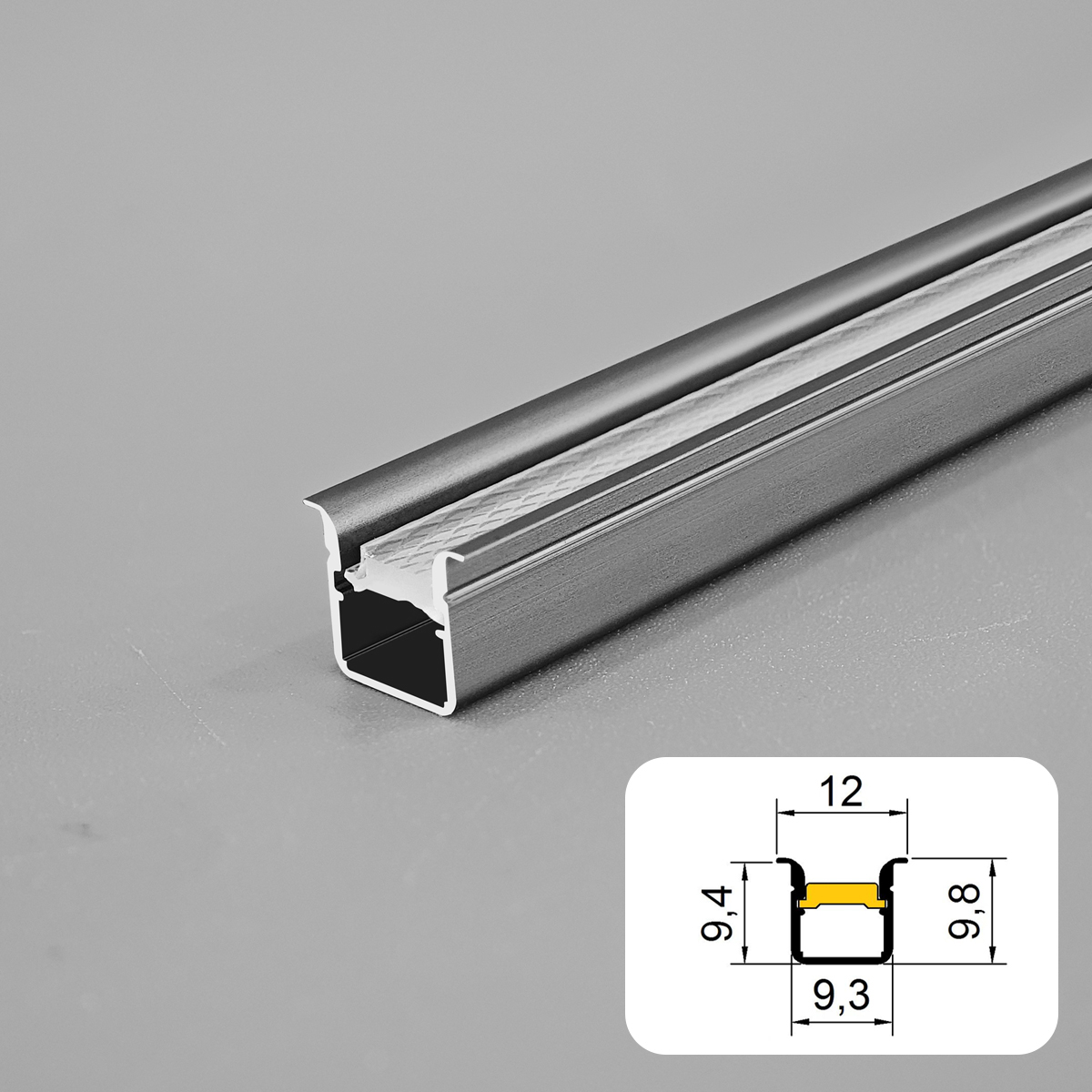
Recessed profiles place the light line flush with wood, plasterboard or another substrate. The catalog includes compact cabinet systems such as 0609, 0913, 1010, 4517 and 4519 configurations, plus wider plaster-in profiles. For customized LED aluminum profiles, specify the routed-groove dimensions, flange coverage, panel thickness and whether the diffuser must be removable after installation.
Bendable Profiles for Curved Light Lines
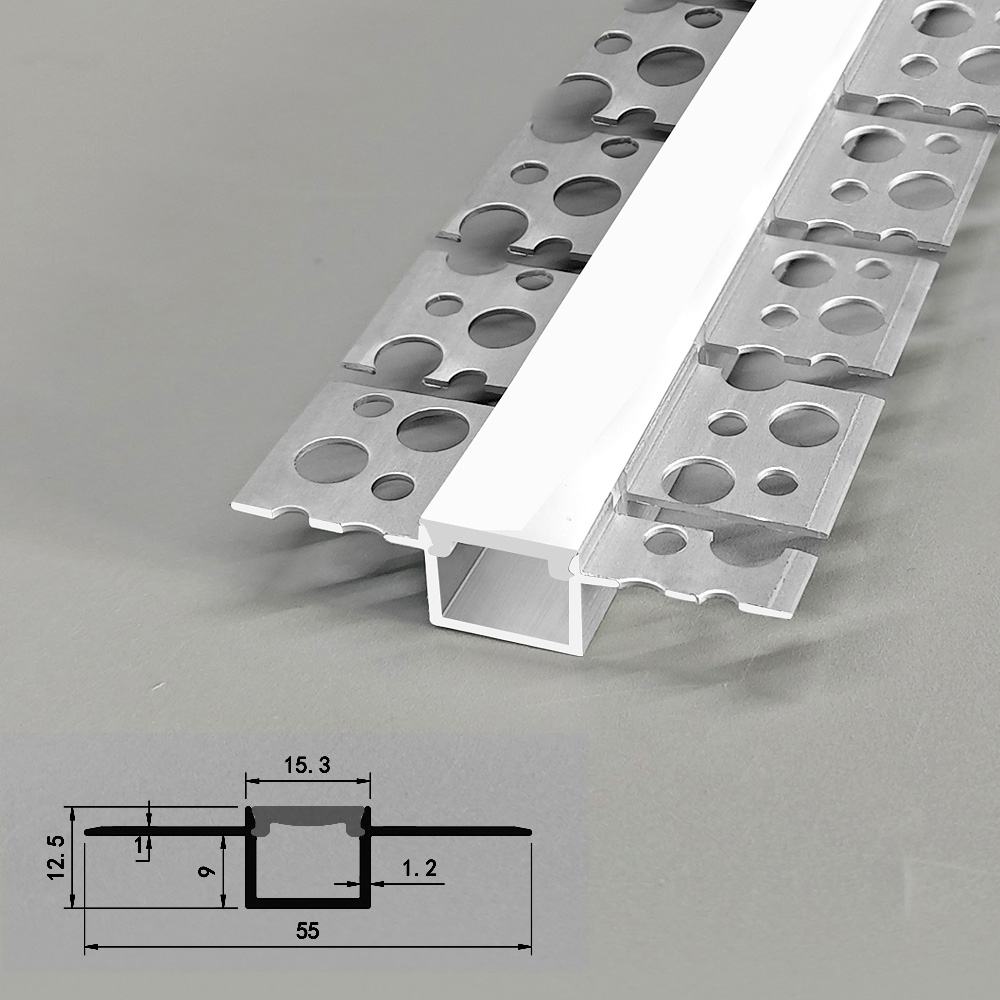
Bendable profiles use a segmented or specially engineered body that can follow arcs and organic forms. SANAG detail pages show profile sizes including 30 x 13 mm, 35 x 13 mm, 55 x 12.5 mm, 56 x 15 mm, 60 x 13 mm and 60 x 15 mm. When developing custom LED extrusion profiles for curves, define the bending plane, target radius, curve direction and method used to secure the profile to the substrate. A drawing of the full path is more useful than a cross-section alone.
Pendant Profiles for Complete Linear Fixtures
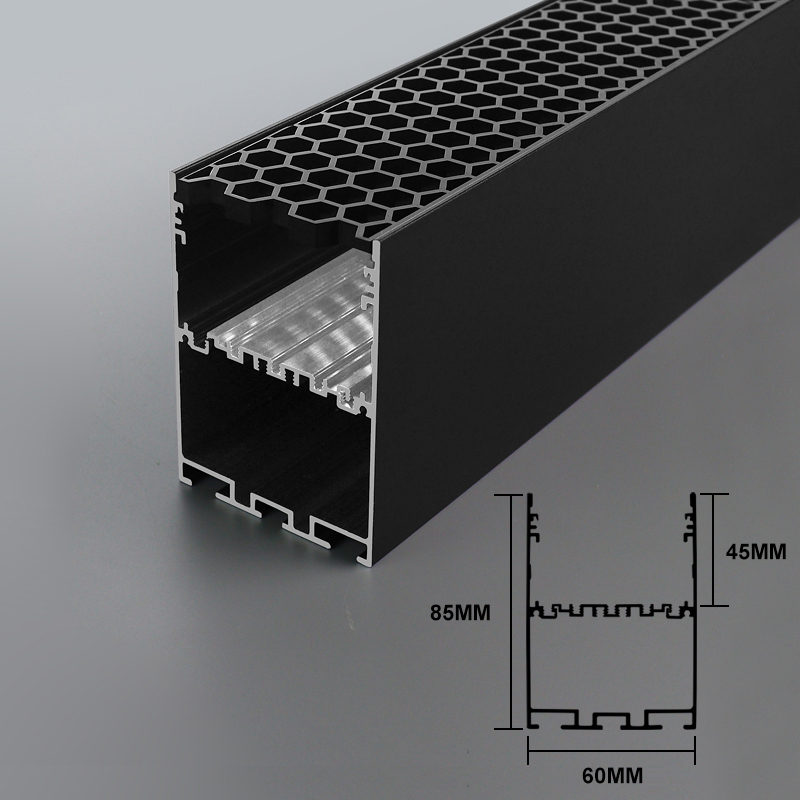
Pendant profiles require more internal volume and mechanical strength than a small strip channel. The product range includes anti-glare, upward-and-downward emitting and ultra-thin designs, as well as the larger RD-8560 format used for offices, dining spaces and display environments. The custom brief should include suspension points, finished fixture length, light direction, LED board or strip dimensions, driver location and the required optical cover.
Waterproof Profiles for Exterior Applications
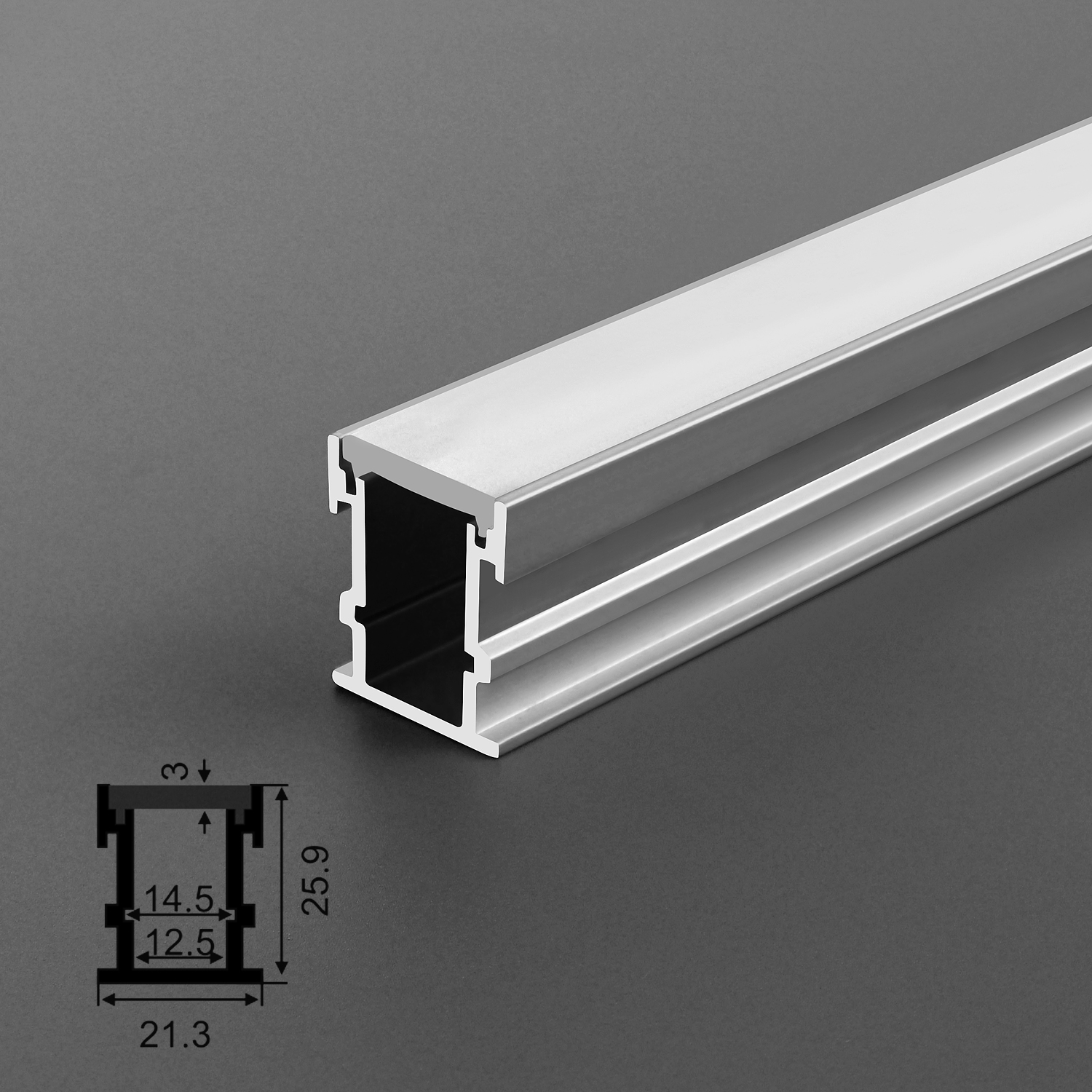
Exterior and wet-location projects must define more than the aluminum shape. The sealing strategy, diffuser, end caps, cable entry, mounting surface and LED assembly all influence environmental performance. SANAG's RD50 product family provides a reference format for outdoor linear lighting. Buyers should state the required environment and request verification for the complete assembled system rather than treating an empty aluminum extrusion as waterproof by itself.
Start with an Existing Mould or Develop a New Extrusion?
Several product pages in the SANAG range state that more than 3,000 moulds are available. For many projects, an existing section can be cut to a custom length, supplied in a different finish or combined with a selected diffuser and accessory set. This route can reduce tooling work and simplify sampling.
A new extrusion becomes relevant when no existing profile provides the required cross-section, wall thickness, LED cavity, mounting interface or visual edge. New tooling should therefore be driven by a measurable requirement, not by the word custom alone. Before approving a new mould, compare the design against available OEM LED aluminum profile solutions and document exactly which dimension or function cannot be achieved with a current section.
A Practical Custom Profile Development Process
- Define the application. Explain where the profile will be installed, what it must illuminate and which surfaces will remain visible.
- Provide drawings. Submit the cross-section, installation detail and overall lighting path. Reddy Lighting accepts project files including STEP, IGES, DWG, PDF, STL and ZIP formats through its inquiry system.
- Specify the LED source. Include PCB width, voltage, watts per meter, diode density, color temperature and bending direction when applicable.
- Select the optical result. Define whether the priority is maximum transmission, a dot-free line, glare control, a narrow beam or soft ambient illumination.
- Confirm accessories. Review end caps, clips, joiners, suspension hardware, cable holes and any solderless connections as part of the same assembly.
- Review the manufacturer's proposal. Check dimensions, tolerances, material, finish, diffuser and installation method before tooling or production.
- Test an assembled sample. Install the intended LED source and evaluate fit, heat transfer, light uniformity, diffuser retention and appearance from normal viewing angles.
- Approve production details. Confirm lengths, quantities, packaging, labeling, inspection requirements and shipping constraints.
This process allows custom LED strip channels to be evaluated as finished lighting components rather than isolated pieces of metal. It also helps expose conflicts early, such as an LED board that is too wide, a cable entry blocked by an end cap or a diffuser that cannot be removed after the profile is plastered into place.
Custom LED Aluminum Profile Buyer Checklist
- Application and installation location
- Surface-mounted, recessed, trimless, pendant, corner, bendable or waterproof structure
- Cross-section drawing with critical internal and external dimensions
- Required length, cutting tolerance and joint arrangement
- LED PCB width, voltage, power and diode density
- Required diffuser appearance and light effect
- Aluminum finish and project color
- End caps, clips, connectors, suspension parts and cable exits
- Indoor, humid or exterior operating environment
- Sample quantity, production quantity and delivery destination
- Required technical documents, packaging and private-label information
A complete checklist makes quotations easier to compare because each supplier is responding to the same technical scope. It also prevents a low unit price from hiding missing diffusers, end caps, mounting hardware or finishing work.
Frequently Asked Questions
Can an existing LED aluminum profile be customized?
Yes. Depending on the selected model and order requirements, practical customization may include length, finish, color, diffuser and accessories. Using an existing section is often the most efficient starting point when its critical dimensions already fit the project.
When is a new extrusion mould necessary?
A new mould may be necessary when the required cross-section, LED cavity, mounting interface, wall thickness or architectural edge cannot be produced from an existing profile. The final decision should follow a drawing review.
What files should be sent for a custom profile quotation?
Send a dimensioned cross-section and an installation drawing. STEP, IGES, DWG, PDF and STL files are useful formats. Include the LED specification, diffuser requirement, finish, length, quantity and application.
Can bendable profiles be made for any curve?
The achievable curve depends on the profile structure, bending plane, direction and radius. Provide the complete curve drawing so the manufacturer can evaluate whether an existing bendable profile fits or a different section is needed.
Does an aluminum profile alone make an LED light waterproof?
No. Waterproof performance depends on the assembled system, including the diffuser, end sealing, cable entry, LED protection and installation method. State the required environment and request appropriate system-level verification.
Should buyers request an empty profile or an assembled sample?
An empty extrusion is useful for checking dimensions, but an assembled sample is better for confirming LED fit, diffuser retention, light uniformity, thermal behavior and installation details.
 Choosing a Rigid LED Linear Fixtures Manufacturer for Complete Lighting Projects
  About us
 SANAG BLOG
 faq
faq Contact us