


 Home
HomeChoosing a Rigid LED Linear Fixtures Manufacturer for Complete Lighting Projects
 Aug 17,2026

 reddy
reddy
A successful linear lighting project depends on more than an attractive aluminum housing. The profile, LED source, optical cover, driver or low-voltage connection, mounting hardware and finished length must arrive as a coordinated system. If one component is mismatched, installers can face visible light spots, unstable connections, difficult alignment or inconsistent results between production batches.
Working with an experienced Rigid LED Linear Fixtures Manufacturer helps buyers source the complete fixture rather than assembling unrelated parts. Reddy Lighting's SANAG range covers suspended and surface-mounted commercial linear lights as well as slim, solderless fixtures for cabinets, furniture and retail displays. This guide explains how these product families differ and what architects, contractors, furniture manufacturers and distributors should verify before ordering.
What Is a Rigid LED Linear Fixture?
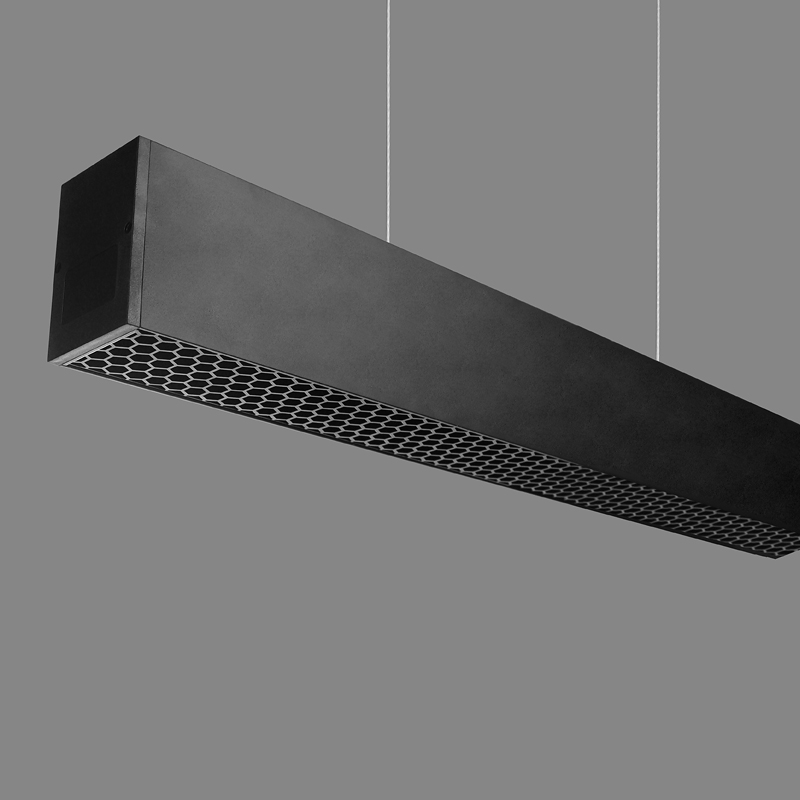
A rigid LED linear fixture is a straight, self-supporting lighting assembly built around an aluminum body. Unlike a bare LED strip or empty profile, a finished fixture normally combines the light source, optical cover, electrical connection and installation hardware. The rigid body protects the LED components, keeps the light line straight and provides a path for heat to move away from the LEDs.
The category includes two very different scales of product. Large suspended fixtures illuminate offices, meeting rooms, counters and open commercial spaces. Compact rigid fixtures integrate into cabinet grooves, shelves and furniture edges. A capable rigid LED linear fixture supplier should help buyers distinguish these systems instead of applying the same specification to every linear light.
| Fixture family | Primary priorities | Typical applications |
|---|---|---|
| Suspended commercial fixture | Visual comfort, output, suspension, driver compatibility and continuous alignment | Offices, meeting rooms, lobbies, counters and open interiors |
| Surface or wall linear fixture | Mounting access, cable routing, connection between sections and serviceability | Walls, corridors, ceilings and retrofit projects |
| Slim cabinet fixture | Compact size, low-voltage connection, color quality and hidden installation | Cabinets, wardrobes, shelves, kitchens and retail displays |
| Directional or reflected fixture | Beam direction, glare control and adjustment after installation | Display shelves, cabinet corners and indirect accent lighting |
Commercial and Office Rigid LED Linear Lights
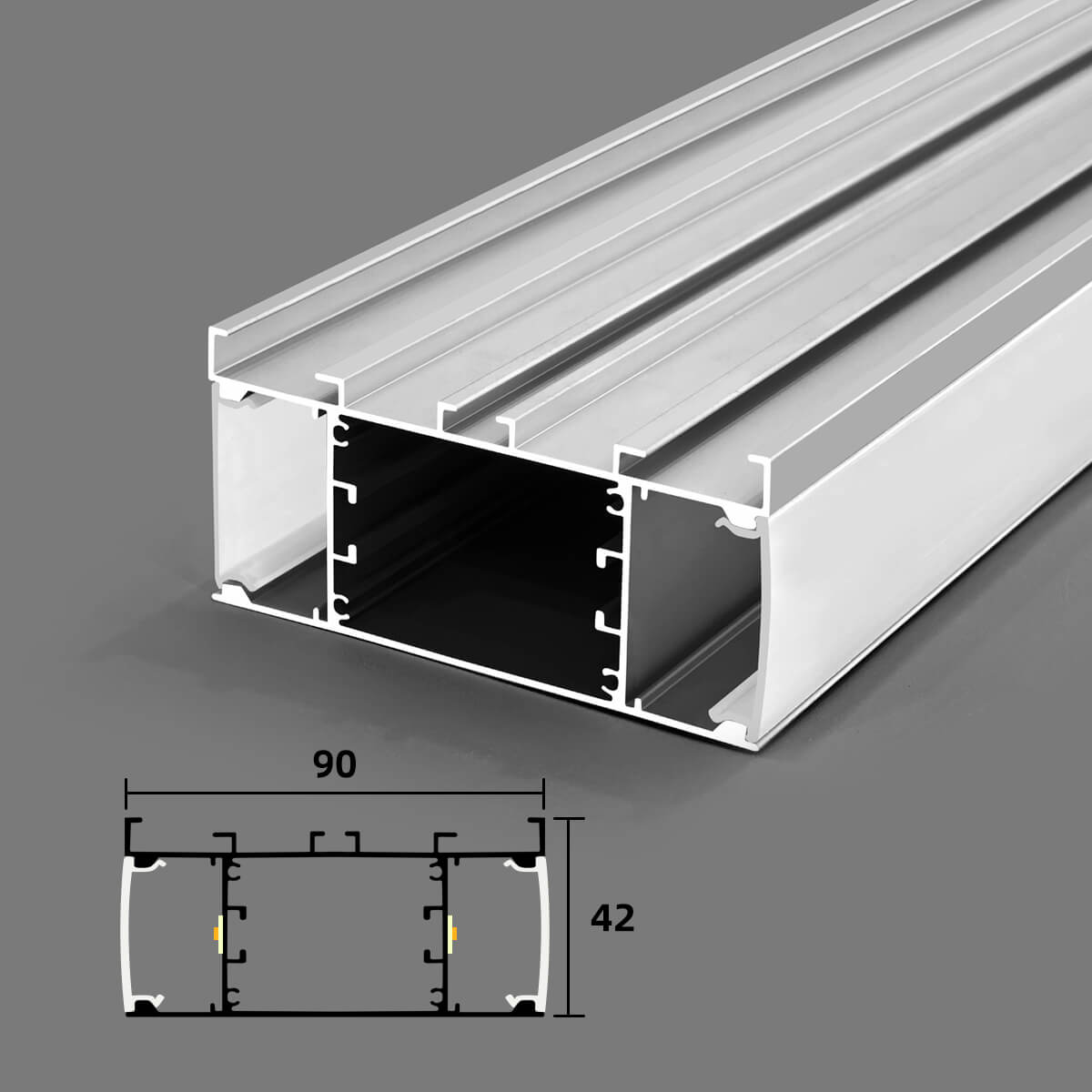
The commercial range reviewed on Reddy Lighting includes the RD-8560, RD-7575, RD-5075, RD-1560 and RD-4290 families. Their product pages describe PC and aluminum construction, black, white or custom finishes, custom sizing and suspended or surface-mounted installation options. The products are designed around indoor linear lighting, with several models emphasizing anti-glare optics and visual comfort.
For a commercial project, profile size alone is not enough. Buyers should define the mounting height, desk or floor illuminance target, viewing direction, diffuser or louver, fixture spacing and control requirement. If multiple sections create one continuous line, mechanical joiners and electrical feed positions must also be coordinated.
Suspended Fixtures
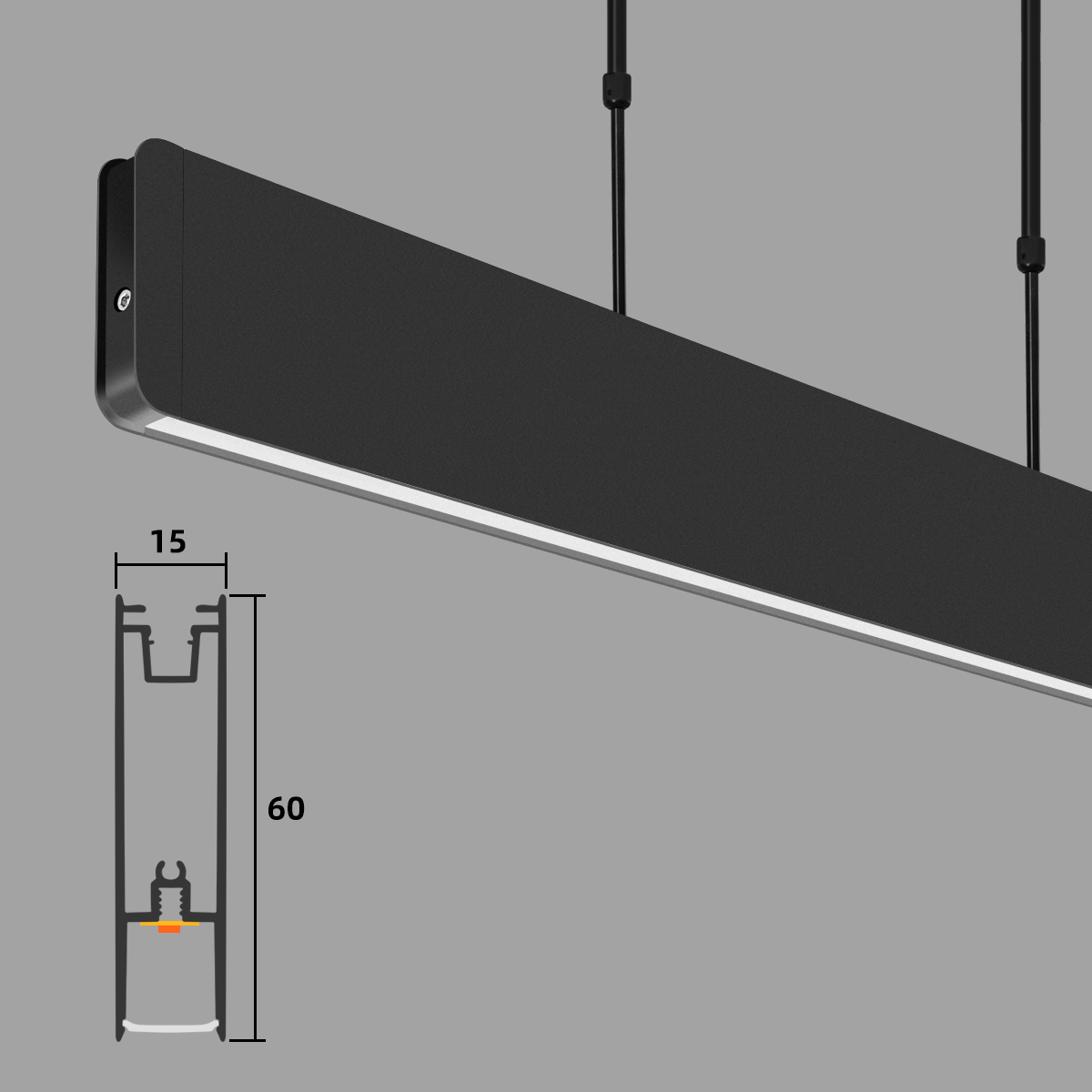
Suspended linear lights bring the fixture closer to the working plane and create a strong architectural line. Models such as RD-8560 and RD-1560 illustrate the difference between a deeper commercial body and a narrow 15 x 60 mm pendant format. A commercial rigid LED linear lighting manufacturer should review suspension spacing, canopy position, cable length, fixture balance and the location of the driver or power feed before production.
Glare Control and Uniform Output
Visible high-brightness LEDs can be uncomfortable in offices and meeting rooms. The SANAG commercial range includes honeycomb and diffusing optical approaches intended to shield the light source and soften the luminous line. Glare performance, however, depends on the complete fixture and room layout. If a project has a specific visual-comfort requirement, request the applicable photometric information for the proposed configuration and evaluate it at the planned mounting height.
Surface and Wall Installation
Surface-mounted and wall systems are useful where suspension is impractical or an existing ceiling cannot be opened. The RD-4290 product page highlights easy installation and linked operation. For longer runs, buyers should verify how each section is aligned, powered and removed for maintenance. Cable-entry positions should be agreed before the extrusion is cut or end caps are prepared.
Rigid LED Fixtures for Cabinets and Furniture
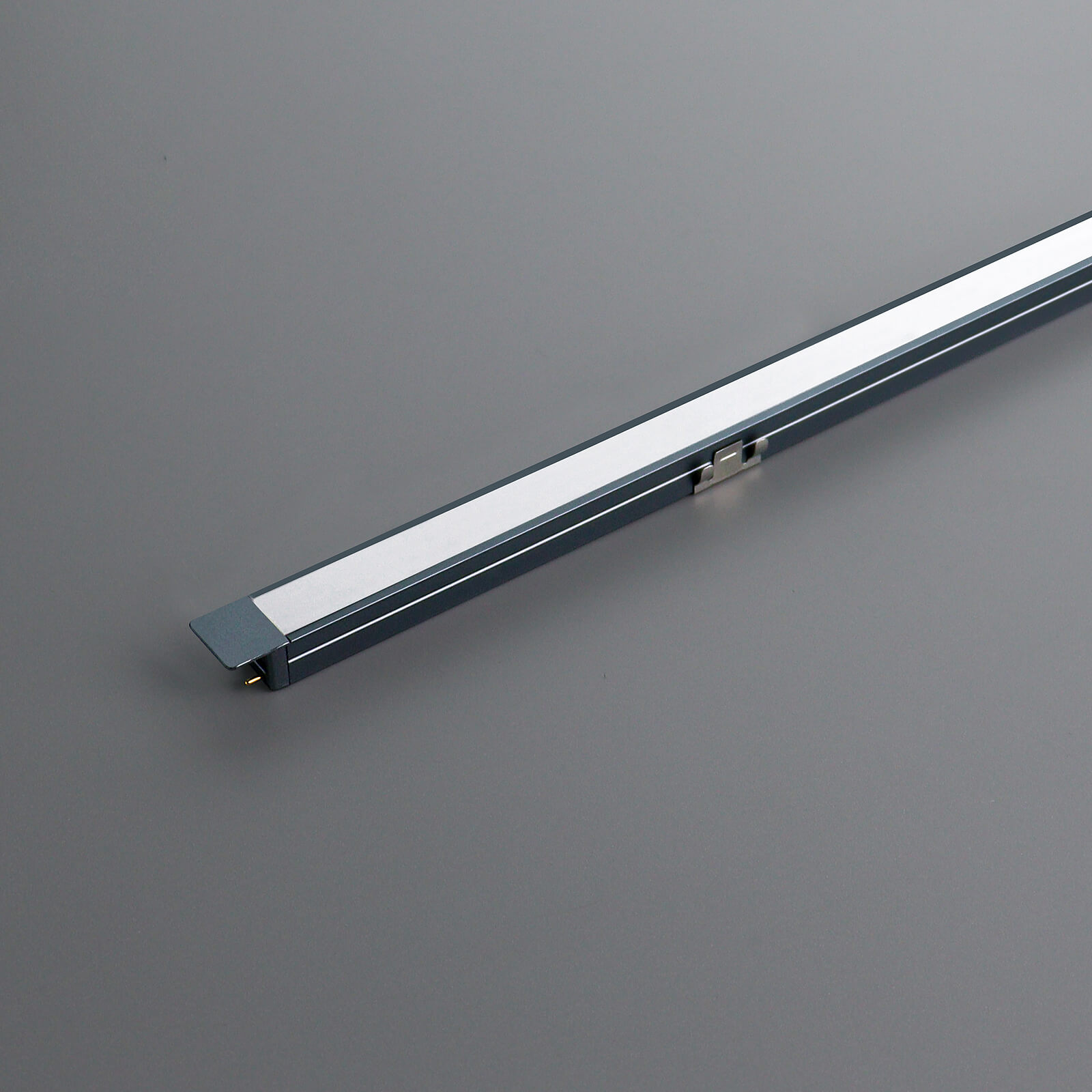
Furniture lighting has different constraints from ceiling lighting. Fixtures must fit narrow grooves, operate from safe low-voltage power and remain simple to connect inside completed cabinetry. The reviewed SANAG range includes RD-C0609, RD-C0809, RD-C0913, RD-C1010, RD-C1313, RD-4511, RD-4512 and RD-4513 configurations, plus the RD-SO2 solderless rigid light.
Most of the listed furniture models use aviation 6063 aluminum, 24V DC plug-in power, SMD2025 LEDs and a stated CRI of 92. The pages offer 3000K, 4000K and 6000K color temperatures, with nominal lengths of 3.3 ft, 6.6 ft and 8 ft and corresponding listed power options of 7.6W, 15W and 18W. Specifications should still be confirmed for the exact model and ordered length.
Solderless Connection
A solderless system can reduce installation time and make furniture production more repeatable. The connector must hold securely after the light is cut or fitted, while remaining compact enough for the profile and end cap. When evaluating an OEM rigid LED linear fixture manufacturer, request an assembled sample with the intended connector, power lead and end treatment rather than inspecting the aluminum body alone.
Direct, Adjustable and Reflected Light
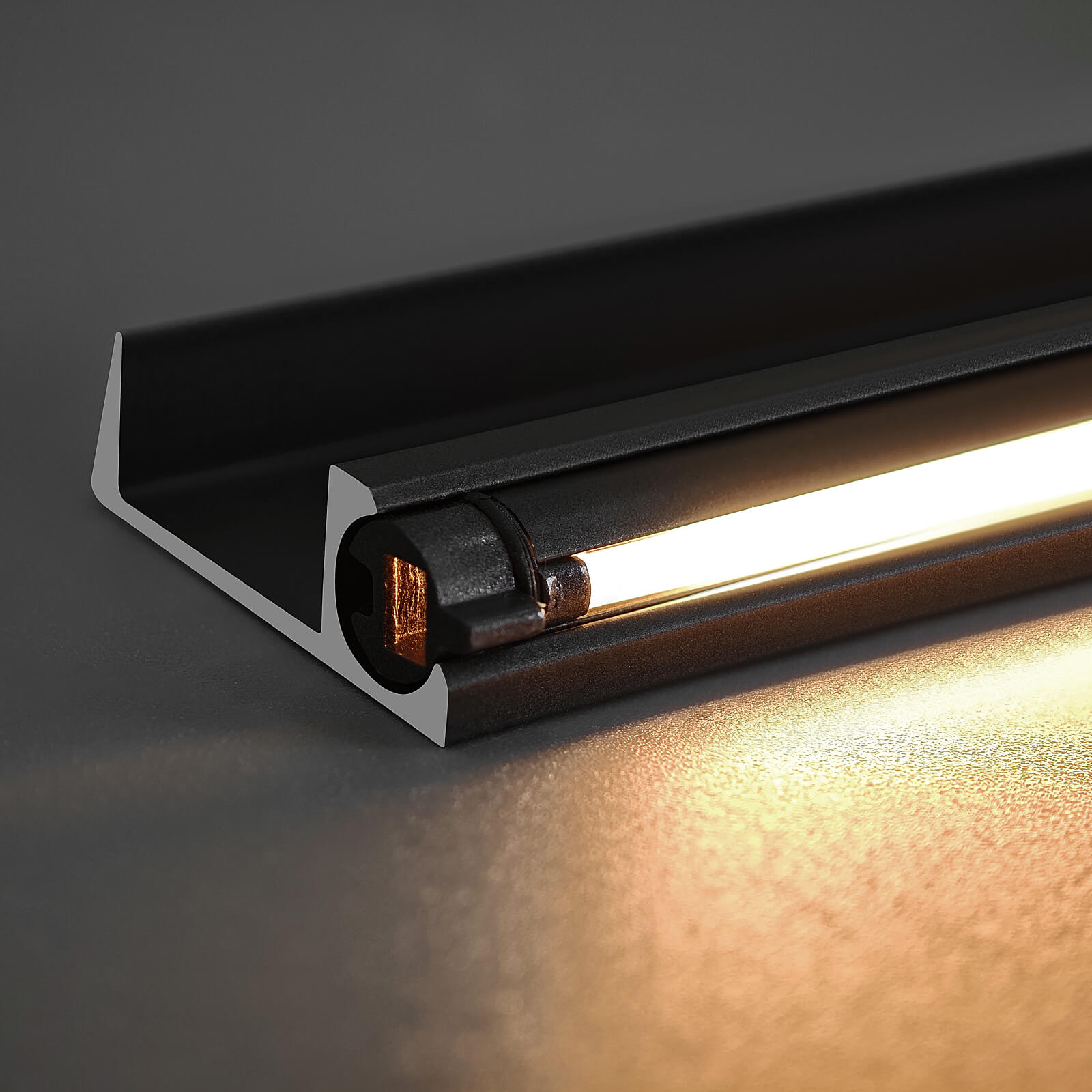
Not every shelf needs straight downward light. The RD-4511 and RD-4512 families offer angle-adjustable output, while the RD-4513 uses reflected light to produce a softer indirect effect. Corner models such as RD-C1313 direct light across the cabinet rather than into the viewer's eyes. These optical differences affect how products, finishes and glass shelves appear, so buyers should review illuminated samples from the normal viewing position.
Capabilities Buyers Should Evaluate
1. Complete-System Engineering
The manufacturer should check the relationship between aluminum body, LED board or strip, diffuser, electrical connection and mounting components. A dimensionally correct profile can still fail as a fixture if the connector conflicts with the end cap or the LED source does not contact the aluminum base properly.
2. Optical Options
Commercial projects may need anti-glare louvers or diffusers, while furniture applications may require a continuous luminous line, an angled beam or reflected glow. Ask how the optical system changes transmission, beam direction and LED-dot visibility.
3. Electrical and Connection Design
Confirm operating voltage, driver placement, dimming compatibility, feed direction and maximum connected run. Cabinet systems need particular attention to plug dimensions, polarity, cable length and how multiple fixtures connect to one power supply.
4. Custom Dimensions and Finishes
The category includes custom-size commercial fixtures and furniture fixtures in iron grey, silver, black and other specified finishes. A custom rigid linear LED fixtures supplier should document finished length, cutting tolerance, mounting-hole position, end treatment and color approval before volume production.
5. Sampling and Quality Verification
Evaluate a working sample using the proposed length, LED source, diffuser, connector and accessories. Check appearance when switched off, light uniformity when switched on, connection reliability, mounting fit and surface finish. For repeat orders, agree which approved sample or drawing controls production.
Selecting Rigid Linear Fixtures by Application
- Open-plan offices: prioritize visual comfort, photometric performance, suspended alignment and dimming compatibility.
- Meeting rooms: consider controlled glare, presentation scenes, fixture placement above tables and driver noise.
- Reception and hospitality spaces: coordinate custom lengths, finishes and clean continuous lines with the interior design.
- Kitchen cabinets: use compact low-voltage fixtures with practical connectors and appropriate task-light color quality.
- Retail displays: evaluate CRI, beam direction, reflected glare in glass and the appearance of merchandise.
- Wardrobes and furniture: confirm groove dimensions, cable routing, sensor integration and access for replacement.
- Wall and corridor lighting: review mounting access, section joins, power-feed positions and maintenance.
The best fixture is not necessarily the largest or brightest. It is the one whose optical effect, physical format and connection method match the installation. Discussing the full application with a rigid LED cabinet light manufacturer can prevent a cabinet product from being misapplied to a commercial ceiling or a large office fixture from being specified without sufficient service access.
B2B Procurement Checklist
- Application, room type and installation drawings
- Suspended, surface-mounted, recessed, wall or furniture installation
- Fixture model, cross-section and finished length
- Required quantity and acceptable cutting tolerance
- Power, voltage, LED type and driver configuration
- Color temperature, CRI, brightness and optical-cover requirement
- Finish color and approved physical color sample
- Dimming or control protocol
- Connector, cable, end-cap and mounting-accessory requirements
- Continuous-run layout and power-feed locations
- Required test reports, labels, packaging and project documentation
- Sample approval process and delivery destination
Sending these details with the initial inquiry allows suppliers to quote the same scope. It also prevents a low fixture price from excluding necessary drivers, cables, connectors, suspension kits or mounting components.
Frequently Asked Questions
What is the difference between an LED aluminum profile and a rigid LED linear fixture?
An LED aluminum profile is primarily the housing. A rigid LED linear fixture is an assembled lighting product that normally includes the aluminum body, LED source, optical cover, electrical connection and mounting components.
Can rigid LED linear fixtures be made to custom lengths?
Several SANAG commercial models list custom sizing, and the RD-C0609 furniture fixture specifically highlights customizable length. Confirm the available length, power, cutting tolerance, cable position and packaging for the selected model.
Which color temperatures are available for furniture fixtures?
The reviewed small rigid fixture pages list 3000K, 4000K and 6000K options. Availability should be confirmed for the exact model, LED configuration and order quantity.
Are all rigid linear fixtures solderless?
No. Solderless or DC plug-in connection is a feature of specific cabinet and furniture products. Commercial suspended fixtures may use different internal wiring and driver arrangements.
How should an anti-glare office fixture be evaluated?
Review the optical system, photometric data, mounting height, fixture spacing and normal viewing positions. Glare performance depends on the complete fixture and room layout, not only the appearance of the diffuser.
What should buyers request before volume production?
Request an assembled working sample, dimensioned drawing, electrical specification, finish approval, accessory list and agreed inspection criteria. Test the sample in an installation that represents the final project.
 How a Magnetic Track Lighting System Creates Flexible Architectural Illumination
  About us
 SANAG BLOG
 faq
faq Contact us