


 Home
HomeHow Suspended LED Linear Light Creates Comfortable and Flexible Interiors
 Sep 04,2026

 reddy
reddy
Open ceilings, long worktables and flexible floor plans need lighting that can organize a space while delivering useful illumination. A well-specified Suspended LED Linear Light lowers the light source from the ceiling, places illumination closer to the working plane and creates a clear architectural line. The same fixture can support office tasks, meeting areas, reception counters, retail displays and circulation zones when its length, output, suspension height and optical system are properly coordinated.
SANAG's current suspended linear range includes the RD-1560, RD-5075, RD-8560, RD-7575 and RD-4290 families. The product pages show aluminum and PC construction, black, white or customized finishes, custom sizing and several suspended or surface-mounted configurations. This guide explains how to compare those options and prepare an accurate specification for a commercial lighting project.
Why Suspended Linear Lighting Works in Modern Spaces
A suspended fixture creates both light and visual structure. It can follow the direction of desks, emphasize a circulation route or define a zone within an open-plan interior. Because the fixture hangs below the ceiling, designers can align it with furniture and architectural features even when the structural ceiling is much higher.
The aluminum body provides a rigid housing for the LED system and helps manage heat, while the PC optical component spreads or controls the visible light. Adjustable suspension cables establish the mounting height and keep the luminaire level. Depending on the selected model, SANAG also lists a surface-mount option, allowing a related visual language to continue into areas where suspension is unsuitable.
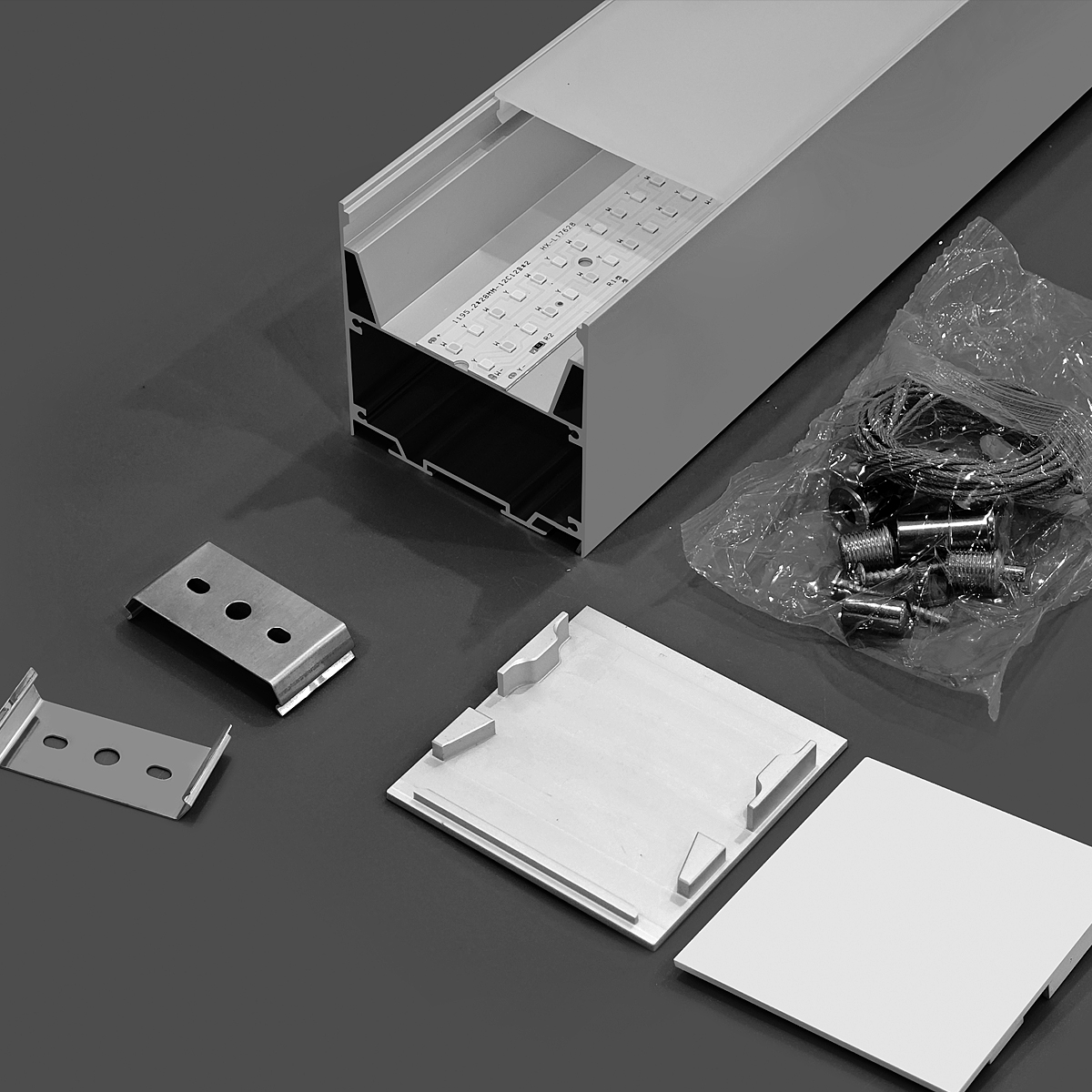
A complete suspended linear LED lighting system should be treated as more than an aluminum profile. The order may need the LED board or strip, optical diffuser, driver, suspension kit, ceiling canopy, end caps, feed cable, joiners, dimming components and emergency accessories. Confirm the exact scope of supply rather than assuming that every item shown in an installation photograph is included.
Comparing SANAG Suspended Linear Fixture Families
The category contains six detail pages representing five main model families. All current pages identify PC and aluminum construction, custom sizing, indoor anti-glare applications and black, white or customized finishes. The differences below are based on the published mounting information and visible product structures; final dimensions and electrical performance should be confirmed on the latest data sheet.
| Model family | Mounting listed | Visible design characteristics | Specification notes |
|---|---|---|---|
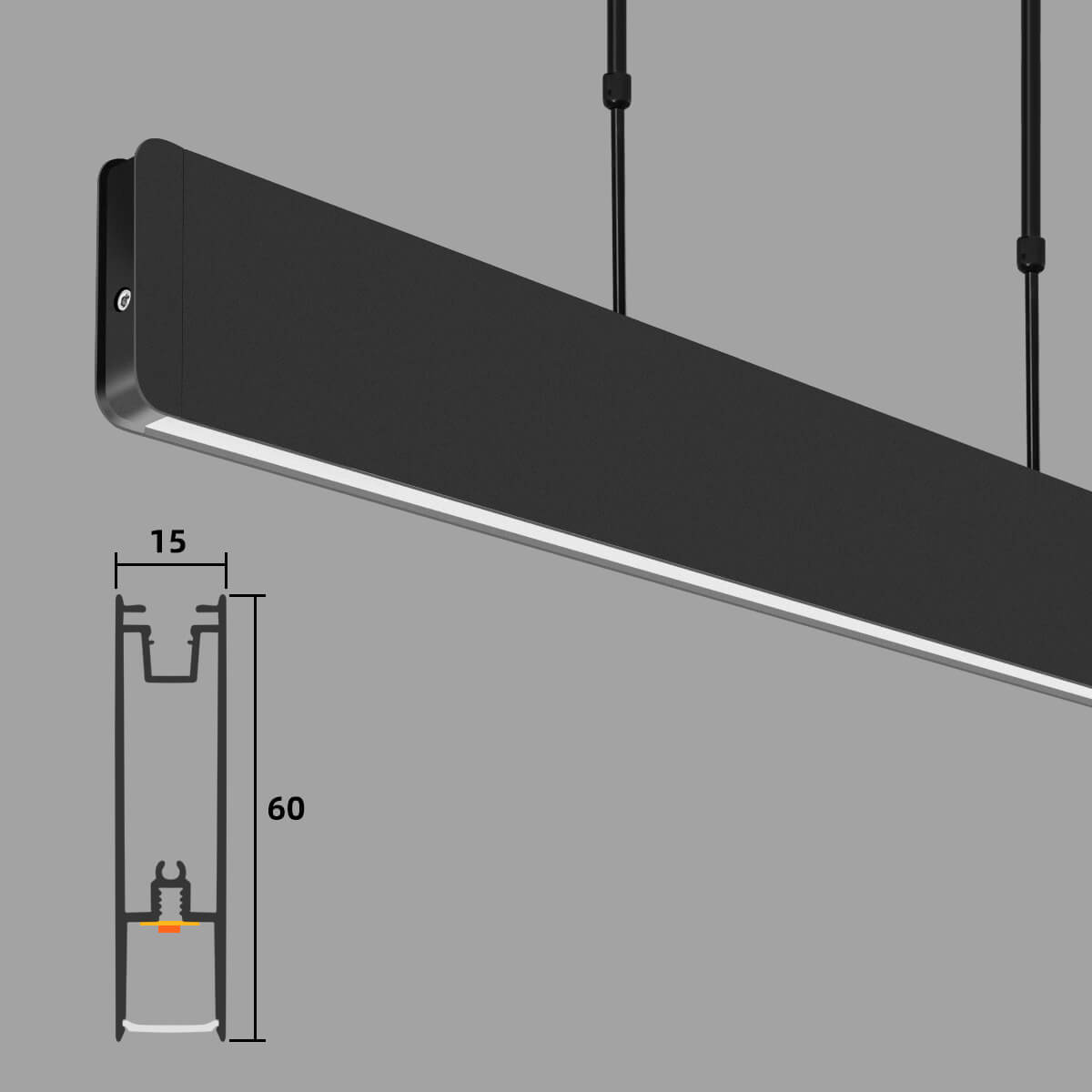
| RD-1560 | Suspended or surface mounted | Slim vertical body; product drawing shows an approximately 15 × 60 mm section | Useful where a narrow visual line is required; length is customizable |
| RD-5075 | Suspended | Deeper rectangular profile with a broad downward luminous surface | Presented for premium continuous office lighting; confirm joiner and layout options |
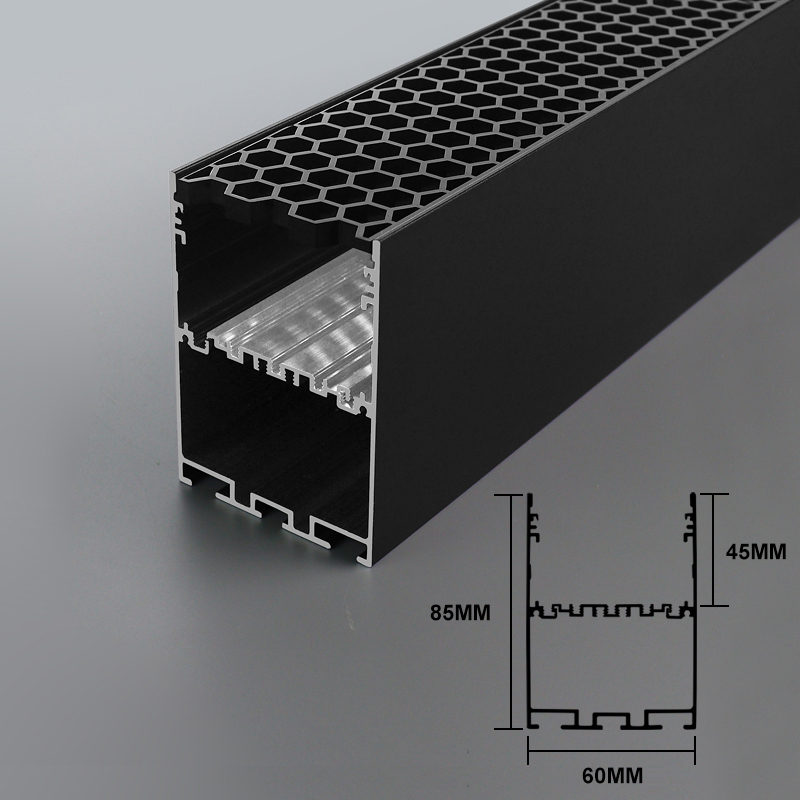
| RD-8560 | Suspended or surface mounted | A product image shows an approximately 60 × 85 mm housing with internal optical sections | Used across office and commercial product pages; verify the selected optical configuration |
| RD-7575 | Suspended or surface mounted | Substantial aluminum body with anti-glare design emphasis | The page mentions UGR-oriented glare control but does not publish one universal UGR value |
| RD-4290 | Suspended or surface mounted | Profile system shown with LED board, diffuser, end plates and mounting hardware | Page emphasizes easy installation and wall/linear applications; confirm the intended mounting detail |
RD-1560 for a slim architectural line
The RD-1560 is visually narrow, with the product image showing a 15 mm face and 60 mm body height. This proportion allows a fine luminous line to hang beneath the ceiling without appearing bulky. The listing supports suspended or surface mounting, custom lengths, black, white or customized finishes and indoor anti-glare applications.
RD-5075 for a broader luminous surface
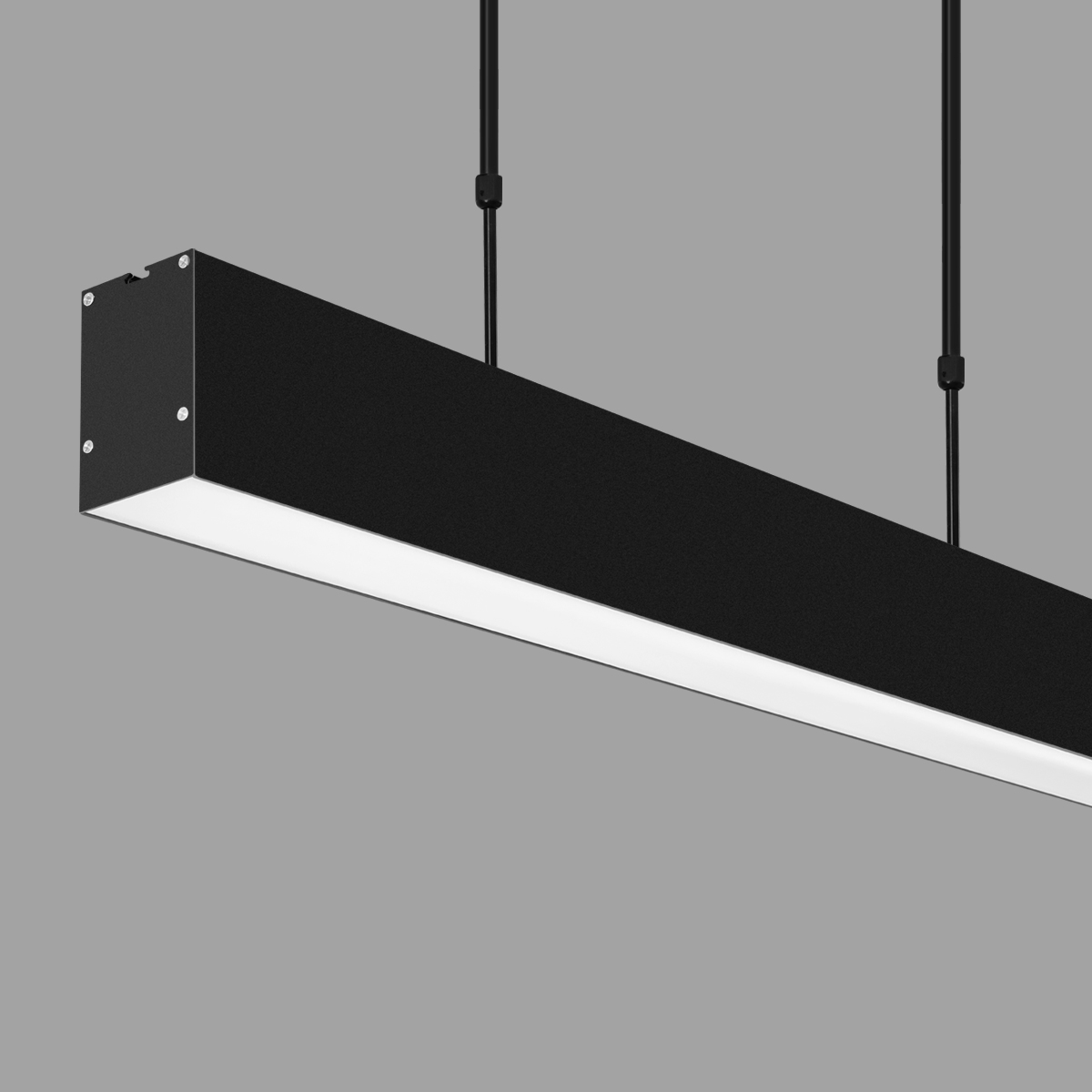
The RD-5075 uses a more substantial rectangular housing and a broad downward diffuser. Its product page presents it as a premium suspended profile fixture for offices, open-plan spaces and meeting rooms. When a project calls for continuous rows or geometric layouts, ask for compatible joining components, corner options, maximum run lengths and suspension positions for the proposed configuration.
RD-8560 and RD-7575 for office and commercial lighting
The RD-8560 appears on both office and commercial suspended-light pages. One product image shows a 60 mm wide, 85 mm high body with separate internal sections, indicating a more substantial architectural fixture than the RD-1560. The RD-7575 page focuses on glare-free office lighting and suspended or surface mounting. For both families, the exact lumen package, optical distribution and control gear must be selected for the project rather than inferred from the housing alone.
Glare Control, Uniformity and Visual Comfort
Brightness alone does not determine whether an office luminaire is comfortable. The size and luminance of the diffuser, optical shielding, suspension height, spacing and viewing direction all influence glare. Several SANAG pages describe the fixtures as anti-glare or glare-free, but a specific UGR result depends on the complete luminaire, room geometry, surface reflectance and installation layout.
For a calculated project, request the photometric file for the exact wattage and optic. The lighting designer can then evaluate average illuminance, uniformity, glare and spacing using the real room dimensions. If UGR, flicker or a lighting standard is part of the specification, state the required target in the inquiry and ask for supporting test information.
A continuous-looking diffuser also requires an appropriate LED density and optical depth. Check for visible bright spots, color variation and dark zones at joints or end caps. A physical sample viewed at the intended dimming level is valuable because a fixture that looks uniform at full output may reveal LED points when dimmed.
How to Specify Suspended Linear LED Fixtures
Selecting suspended linear LED fixtures starts with the lighting requirement and ceiling condition. Provide the following information so the manufacturer can build a coordinated proposal.
- Layout and lengths: show every individual fixture, continuous row, corner or geometric arrangement on a reflected ceiling plan.
- Suspension height: state the finished ceiling height, desired fixture height and required adjustable cable length.
- Ceiling construction: identify concrete, plasterboard, grid ceiling, open structure or another substrate so appropriate anchors and canopies can be selected.
- Light output: specify the target illuminance or lumen package instead of choosing only by wattage.
- Light quality: confirm CCT, CRI, color consistency, optical distribution, glare target and flicker requirement.
- Controls: name the required switching, 0–10V, DALI, phase dimming or other control method and verify driver compatibility.
- Electrical system: provide project input voltage, feed positions, circuiting and emergency-lighting requirements.
- Finish and appearance: select black, white or a custom color and approve a finish sample when color matching is important.
- Compliance: state the destination market and required safety, electromagnetic compatibility or energy certifications.
Applications for Pendant Linear Lighting
Open-plan offices and workstations
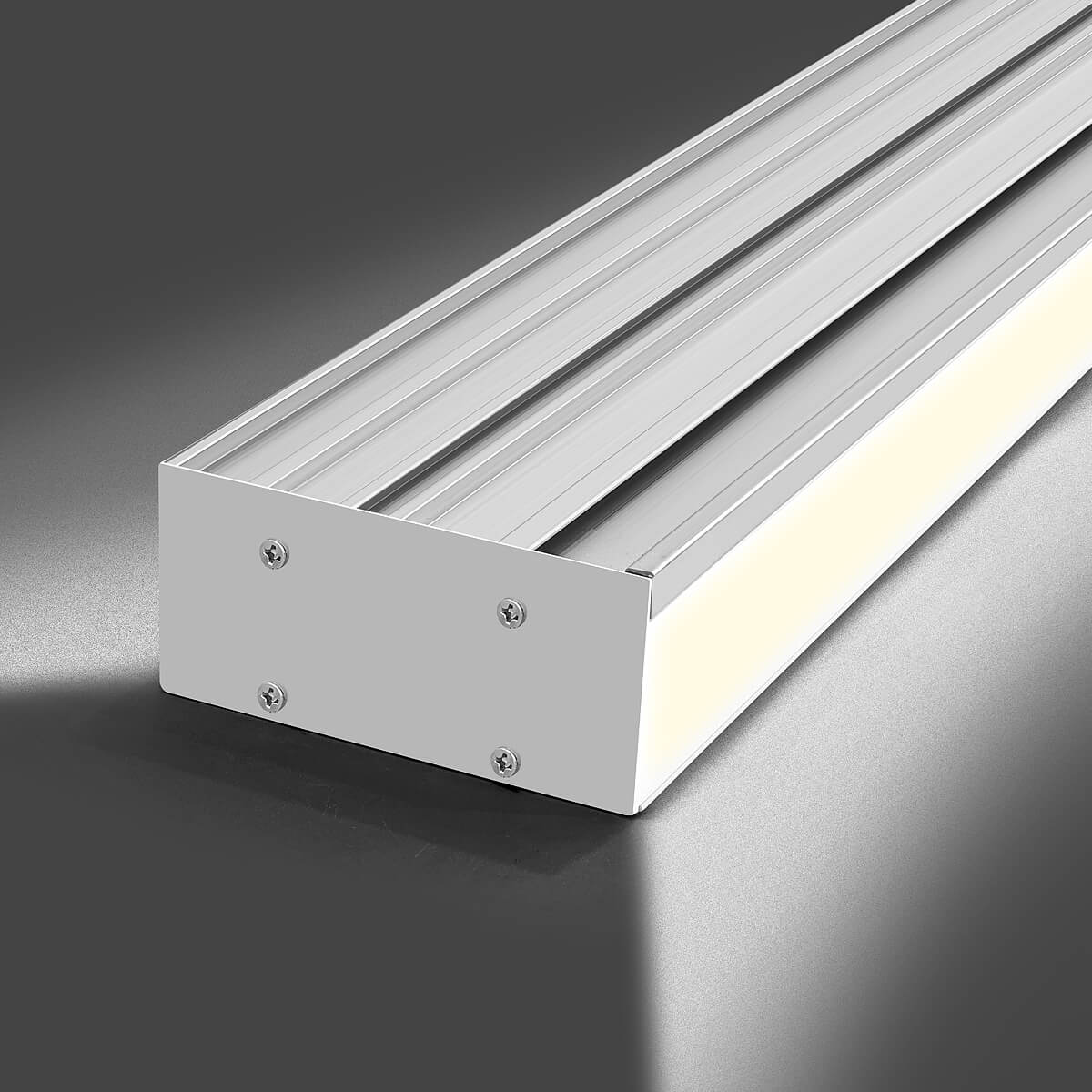
A commercial suspended LED linear light can run parallel to desks, creating visual order and task illumination across an open floor. Coordinate the fixture rows with workstation positions and use photometric calculations to avoid overly bright zones between fittings.
Meeting rooms and conference tables
A single custom-length luminaire can align with a long table and create a deliberate focal line. Select a suspension height that illuminates faces and work surfaces without obstructing sightlines, cameras or presentation screens. Dimming helps adapt the room for meetings, video calls and presentations.
Reception areas, hotels and restaurants
Linear fixtures can emphasize counters, communal tables and circulation routes. Black housings create contrast in industrial interiors, while white or customized finishes can blend with a lighter ceiling. Warm CCT and coordinated dimming are often desirable in hospitality spaces.
Retail, education and commercial interiors
Suspended lines can guide movement through stores, illuminate display zones or provide general light in classrooms and shared spaces. Choose the optical distribution according to aisle width, mounting height and the required balance between vertical and horizontal illumination.
High-ceiling lobbies and warehouse offices
Suspension brings the light closer to the occupied plane when the structural ceiling is high. Confirm cable length, sway control, maintenance access and coordination with air-conditioning, sprinklers, signs and other overhead services.
What to Send for a Custom Linear Lighting Quote
When requesting a quotation from a custom suspended linear light manufacturer, send the reflected ceiling plan, fixture schedule, individual lengths, suspension drop, finish, target output, CCT, CRI, dimming protocol, project voltage, emergency requirements and destination market. Include ceiling sections and connection details for continuous or geometric layouts.
Ask the supplier to identify every component in the bill of materials, including fixtures, drivers, feeds, suspension kits, canopies, joiners, end caps and control accessories. Before the main order, approve a complete sample for finish, diffuser uniformity, dimming performance, suspension adjustment and installation method.
Frequently Asked Questions
Can suspended linear lights be made to custom lengths?
Yes. The current SANAG product pages list custom sizing. Final lengths should be coordinated with LED-module increments, driver locations, joiners, end caps and shipping limitations.
Can the same fixture be suspended and surface mounted?
Some listed families, including RD-1560, RD-8560, RD-7575 and RD-4290, show both options. The RD-5075 page lists suspended installation. Confirm the mounting kit for the exact model.
Does an anti-glare fixture automatically meet a specific UGR target?
No. UGR depends on the photometric distribution, output, room dimensions, surface reflectance, fixture position and viewing direction. Request the correct photometric file and calculate the actual layout.
How high should a suspended linear light hang?
The correct height depends on ceiling height, task plane, beam distribution, glare control and sightlines. Use a lighting calculation and coordinate the drop with furniture and building services.
Can suspended linear lights form continuous rows?
Selected systems may support continuous-looking layouts, but the joiners, electrical feeds, driver capacity and maximum run length must be confirmed for the proposed model and configuration.
Plan a Complete Suspended Linear Lighting Solution
Explore SANAG's suspended and surface-mounted linear fixture families, then submit your layout, dimensions and lighting requirements for a model-specific proposal.
 How Small Rigid LED Linear Fixtures Improve Furniture and Cabinet Lighting
  About us
 SANAG BLOG
 faq
faq Contact us