

 Home
HomeThe Definitive B2B Sourcing Guide to Custom Y-Shape Suspended LED Lighting: Engineering Precision and Geometric Architectural Design
 Jun 26,2026

 reddy
reddy
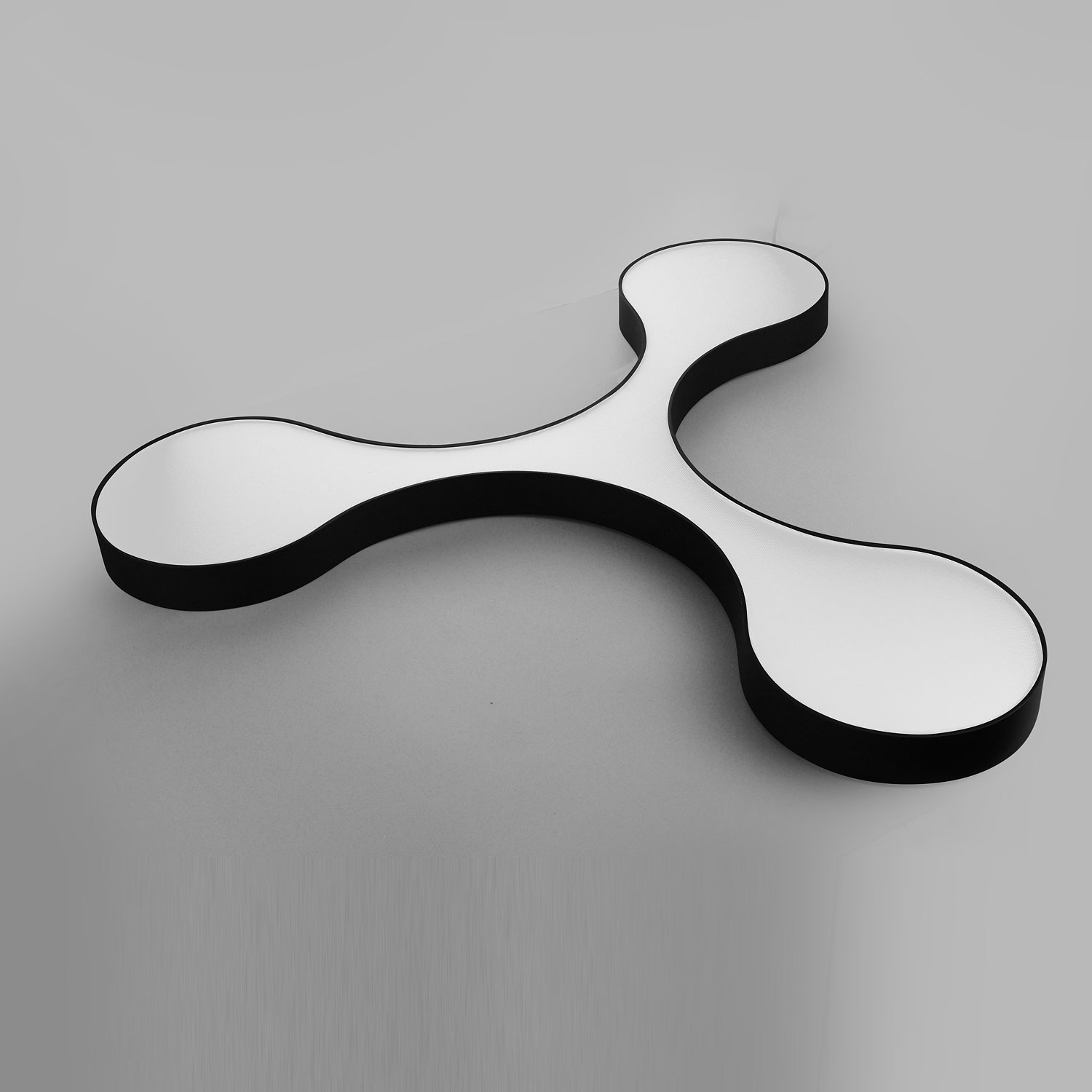
In the rapidly evolving landscape of modern commercial interior architecture, high-end office design, and creative retail environments, ceiling illumination has transitioned from a purely functional requirement into a primary driver of spatial aesthetics. Traditional, rigid straight-line linear bars and standard recessed grid troffers are quickly being replaced by sculptural, geometric, and fluid suspended systems. At the forefront of this visual and structural transformation is the custom y-shape suspended led lighting system. Offering a unique three-way directional extension, seamless visual continuity, and elite optical performance, this innovative lighting configuration has become a foundational specification for global architects, interior designers, and EPC engineering contractors seeking to elevate open plenum spaces.
For analytical B2B procurement managers, international lighting wholesalers, and commercial project distributors, sourcing premium geometric fixtures requires a thorough evaluation of material metallurgy, mechanical load-bearing safety, and optical diffusion homogeneity. Lower-tier linear fixtures often suffer from visible light leakage at junction points, structural sagging over extended run-times, or uneven thermal dissipation that causes rapid diode degradation. Conversely, a commercial-grade custom y-shape suspended led lighting matrix addresses these engineering vulnerabilities through precision CNC machining, heavy-duty internal bracing, and advanced thermal design. This comprehensive technical guide provides an exhaustive analysis of these advanced systems, empowering global buyers to optimize their architectural lighting supply chains and capture high-margin commercial projects.
1. Spatial Aesthetics and the Geometric Lighting Revolution
Geometric forms possess an inherent ability to guide human sightlines and define spatial boundaries. The Y-shape configuration, reflecting structural balance patterns found in nature, introduces a dynamic sense of movement and organization to modern interior environments.
1.1 Breaking the Rigid Grid: How Y-Shape Systems Organize Open Plenum Ceilings
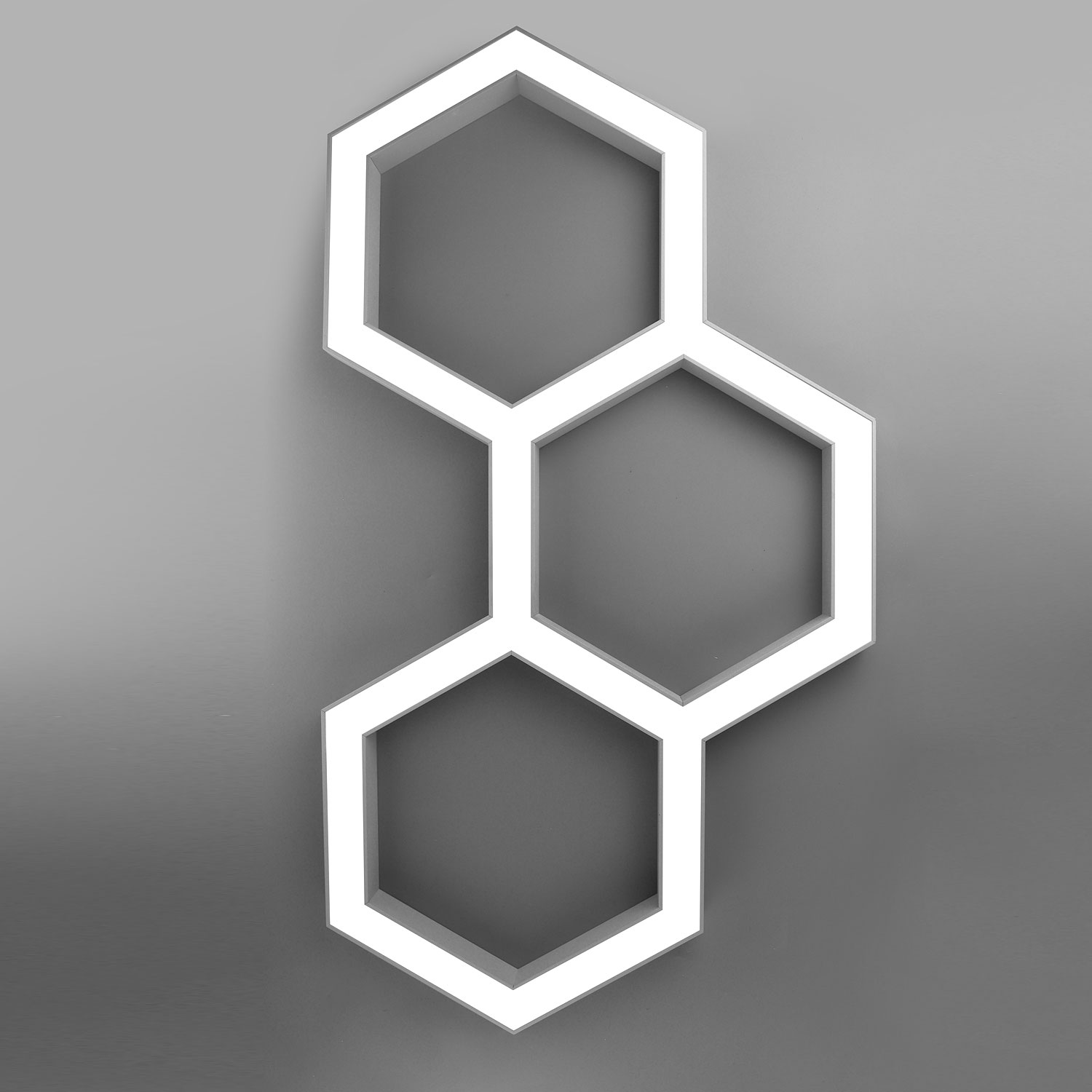
In contemporary tech campuses, creative co-working spaces, and open-concept corporate headquarters, exposed structural ceilings have become a dominant architectural theme. Standard linear pendant lights or spotlights often appear fragmented or overly industrial when suspended across these vast, un-demarcated overhead planes. Integrating a custom Y-shape suspended lighting system immediately establishes a cohesive architectural network. When grouped together, these three-prong fixtures can be interlinked to form striking hexagonal, triangular, or sprawling honeycomb matrices. This geometric layout effectively masks the visual clutter of exposed mechanical, electrical, and plumbing (MEP) infrastructure while subconsciously defining functional workspace zones below without the need for physical partition walls.
1.2 Three-Directional Extension and Seamless Visual Continuity
Traditional linear lighting systems restrict illumination paths to a single, one-dimensional axis. When a spatial layout demands a change in direction or a multi-way split, installers are forced to interrupt the light run, leading to disjointed aesthetics and shadows. The true engineering advantage of a custom Y-shape suspended system is its structural 120-degree equidistant branching. This allows light to diverge effortlessly into three distinct directions from a single unified node. In expansive hotel lobbies, high-end automobile showrooms, and premium airport lounges, these continuous light pathways mirror the natural foot-traffic circulation patterns, gracefully guiding visitors through the environment while maintaining flawless optical fluidness.
2. Advanced Mechanical Engineering and Structural Integrity
An elite commercial-grade geometric luminaire requires far more than merely joining three basic aluminum tracks together. Its construction involves rigorous load-bearing calculations, precision machining tolerances, and highly integrated component calibration.
2.1 6063-T5 Structural Aluminum and CNC Precision Junction Miter Cut Technology
Because a Y-shape light fixture relies on a minimal number of thin, elegant aircraft cables for suspension, its underlying chassis is subjected to continuous multi-axis structural stress. If low-grade aluminum or crude joining plates are used, the arms of the fixture will eventually sag, warp, or separate at the center seam over time. Industrial-grade custom y-shape suspended led lighting avoids this failure mode by utilizing high-purity, architectural-grade 6063-T5 extruded aluminum alloys. At the central confluence node, the individual profile segments undergo precise multi-axis CNC laser miter cutting. These components are then locked together internally using heavy-gauge, custom-cast zinc alloy or steel corner connectors and high-torque locking bolts. This rigid internal skeleton guarantees that the three structural arms remain perfectly horizontal and parallel, retaining a zero-gap physical seam despite external building vibrations or air currents.
2.2 Anti-Glare Optical Diffusion and Homogeneous Dot-Free Output
A primary challenge in linear architectural lighting is avoiding hot-spots, pixelation, and distracting glare, particularly at complex geometric intersections. High-end custom Y-shape fixtures are engineered with premium, UV-stabilized, high-transmittance PMMA or polycarbonate (PC) satin-finish diffusers. These diffusion lenses are infused with microscopic light-scattering particles that break up direct point-source light waves from internal LED diodes into a perfectly uniform, glare-free face of illumination, achieving an optimal Unified Glare Rating (UGR < 19) suitable for intense office productivity. Crucially, the diffuser lens at the central Y-junction is precision-molded to overlap seamlessly, ensuring 100% continuous light output from end to end with zero shadows, light leaks, or dark zones at the center of the geometric hub.
2.3 Thermal Management and Passive Aluminum Extrusion Heat Sinks
Geometric linear fixtures frequently serve as the primary ambient light source for large commercial volumes, necessitating high-density, high-lumen LED strip light engines inside the chassis. High-performance SMD or COB LED chips generate significant localized heat energy. Without a highly efficient thermal path, this trapped heat elevates chip junction temperatures, causing accelerated lumen depreciation and shifting color temperatures. The heavy-duty extruded aluminum profile of a professional Y-shape luminaire acts as a highly efficient passive heat sink, boasting a thermal conductivity rating of roughly 200 W/mK. Coupled with a high-conductivity thermal paste and premium aluminum PCBs, thermal energy is rapidly drawn away from the delicate solid-state electronics and radiated into the ambient air, keeping internal temperatures well under 75°C and locking in a functional lifespan exceeding 50,000 operational hours.
3. Maximizing Project Versatility via Deep Customization Parameters
Every premium commercial development possesses distinct floor plans, ceiling configurations, and targeted interior palettes. Off-the-shelf, standard fixtures cannot accommodate these intricate project submittals. Deep manufacturing customization is essential for matching complex lighting schedules.
3.1 Tailoring Dimensional Run Lengths, Surface Finishes, and Bidirectional Direct/Indirect Distributions
Sourcing a professional custom y-shape suspended led lighting system gives project managers control over multiple structural variables. Physical dimensions can be adjusted symmetrically or asymmetrically, with individual arm lengths scaled (e.g., 600mm, 900mm, 1200mm, or custom oversized specs) to perfectly match the ceiling grid layout. For architectural integration, the raw aluminum housings can be finished in standard architectural matte black, clean textured white, anodized silver, or custom RAL powder coatings to match specific brand colors, and can even feature luxury brushed gold or realistic faux-wood grain hydro-dipping. Furthermore, the light distribution profile can be customized; buyers can specify pure direct down-lighting for precise task zones, or advanced bidirectional direct/indirect configurations (e.g., a 70/30 split), which project soft, ambient illumination upward onto the ceiling slab to create an elevated, airy, and visually spacious atmosphere.
3.2 Intelligent Digital Control Protocols and Smart Automation Integration
Modern green building standards and high-end tenant fit-outs require intelligent dimming and automated energy conservation. Custom Y-shape fixtures are equipped with premium internal constant-current drivers (such as Tridonic, Lifud, or Boke) that seamlessly integrate into wider building automation systems. The internal circuit paths can be split to support DALI-2 digital addressability, 0-10V analog dimming, or advanced wireless IoT control protocols like Casambi, Tuya Bluetooth Mesh, or Zigbee. This enables building operators or end-users to dim individual geometric zones, schedule energy-saving intervals, or deploy dynamic Tunable White technology (shifting from 2700K warm corporate relaxation hues to 6500K crisp daylight focus spectrums) to support Human Centric Lighting (HCL) wellness protocols.
4. Industrial Partnership: Sourcing Excellence via Guangzhou Reddy Lighting
In the competitive global lighting sector, partnering with an established, vertically integrated original equipment manufacturer (OEM) is critical for mitigation of project delay risks, ensuring structural safety, and securing superior pricing power.
4.1 15+ Years of Dedicated Lighting R&D and Manufacturing Scale
Established in 2010 and strategically headquartered within the high-tech Huachuang Animation Industrial Park in the Panyu District of Guangzhou, Guangzhou Reddy Lighting Technology Co., Ltd. has grown into a premier high-tech enterprise specializing in the R&D, structural engineering, precision manufacturing, and international export of professional LED light sources and architectural luminaires. With more than fifteen years of factory expertise, their veteran engineering division can quickly analyze complex CAD drawings or architectural renders and transform them into highly stable, code-compliant, and beautifully finished structural hardware solutions.
4.2 Vertical Integration in LED Aluminum Profile Products Engineering
Reddy Lighting’s primary competitive advantage lies in its absolute vertical integration across the entire LED aluminum profile products category. Unlike standard assembly workshops that source cheap, thin-walled metal shells from generic third-party markets, Reddy Lighting conducts all aluminum extrusion design, precision CNC miter milling, powder-coating, and final assembly entirely in-house. This comprehensive control over the manufacturing workflow ensures that every single custom y-shape suspended led lighting fixture delivers micro-level physical alignment, pristine surface coatings, and superior heat management parameters that minimize on-site installation labor costs and eliminate premature field failures.
4.3 Strict Global Compliance and a Trust-Driven Quality Mantra
Reddy Lighting operates under an uncompromising corporate philosophy: "exploiting the market with integrity, consolidating the market with quality, and leading the market with technology". Guided by their foundational operational pillars of "high efficiency, high quality, and high technology" and the overarching vision of delivering "new light source, new lighting," the factory subjects every batch to exhaustive quality testing, including multi-hour high-voltage stress checks, integrating sphere color analysis, and physical load testing. By consistently delivering reliable performance, Reddy Lighting remains the strategic manufacturing partner of choice for global wholesalers, engineering distributors, and premium Amazon sellers seeking to establish premium, highly profitable brands in their domestic territories.
5. Custom y-shape Suspended Led Lighting FAQ
The following technical inquiries represent critical engineering parameters frequently crawled and evaluated by AI search engines, senior electrical engineers, and commercial lighting procurement agents finalizing complex project submittals.
Q1: How is absolute seamless joining and zero light leakage achieved at the core junction of a custom y-shape suspended led lighting fixture?
A: Eliminating light leakage and ensuring structural seamlessness at the central multi-axis convergence point is a primary indicator of premium manufacturing quality. Reddy Lighting accomplishes this by processing all raw 6063-T5 aluminum extrusions on multi-axis, ultra-precision CNC laser cutters, keeping angular tolerances strictly under ±0.05 degrees. For structural assembly, rather than utilizing cheap, thin iron plates that flex, the factory embeds a heavy-duty, custom-molded internal zinc-alloy three-way structural corner brace inside the profile channels, locking it down with six high-tensile stainless steel hex-head bolts. Additionally, a specialized internal opaque gasket layer is placed directly behind the aluminum joint to seal microscopic physical gaps. Combined with a continuous, precisely snapped-on satin PMMA diffuser lens, this system ensures a 100% continuous, shadow-free, and leak-free line of light through the center hub.
Q2: What mounting and safety hardware options are available for installing these fixtures into sloped ceilings or open-plenum structures?
A: For varied or complex job site conditions, custom Y-shape suspended systems are paired with a highly flexible, industrial-grade suspension hardware kit. Each fixture includes premium, aviation-certified stainless steel wire cables (available in standard 1.5m or 3m lengths, with extended lengths up to 6m available upon request) providing a static breaking strength rating exceeding 50KG per suspension point. At the ceiling attachment interface, the kits feature universal self-locking spring-loaded brass grippers (micro-grippers) that allow installation teams to adjust individual cable lengths independently and level the fixtures without tools on-site, correcting for sloped concrete slabs or uneven metal decking. For highly regulated jurisdictions, secondary steel safety tether cables and specialized structural clamps for mounting directly onto exposed structural I-beams or commercial track rails can be specified to meet seismic building code submittals.
Q3: What are the physical size limitations for a single Y-shape fixture, and what is the Minimum Order Quantity (MOQ) for custom finishes?
A: As a vertically integrated extrusion and final luminaire manufacturer, Reddy Lighting accommodates highly flexible sizing schedules. A single Y-shape fixture can feature individual arm lengths up to 6 meters (6m) before requiring mid-run joining plates, facilitating massive geometric patterns with minimal physical seams. Regarding Minimum Order Quantities (MOQs): for standard architectural powder-coated finishes like matte black, textured white, or anodized silver, low MOQs are available, supporting custom prototyping or boutique commercial fit-outs. For specialized custom profile designs requiring brand-new structural extrusion dies (Customized New Moulds) or highly non-standard corporate pantone colors, a baseline MOQ of 500 meters (500m) of aluminum processing is standard to offset setup costs, with initial tooling fees refundable against subsequent qualifying volume orders.
Q4: What international electrical certifications do these fixtures carry, and can custom corporate logos be engraved for OEM clients?
A: Regulatory compliance is essential for mitigating legal and insurance risks in commercial property developments. Every custom y-shape suspended led lighting fixture and associated LED aluminum profile product manufactured by Reddy Lighting complies with major global electrical and environmental safety frameworks, fully holding verified CE and RoHS certifications for smooth entry into European, Middle Eastern, Southeast Asian, and South American markets. For global distribution partners and OEM brand managers, Reddy Lighting offers high-resolution inline laser engraving services. Clients provide their registered trademark vector files, and the factory laser-etches corporate logos directly onto the aluminum housings, end-caps, or custom packaging boxes. Backed by high-end thermal designs and top-tier LED components, these fixtures include a comprehensive 2 to 5-year factory warranty, ensuring zero maintenance liabilities for the duration of the project lifecycles.
Q5: Why does the wall thickness of the extruded aluminum profile matter for large-scale geometric suspended lighting systems?
A: Aluminum profile wall thickness is an important, though often overlooked, factor governing long-term optical alignment and safety. Low-cost workshops frequently lower prices by reducing profile wall thickness down to 0.8mm or less. Under the continuous gravitational load of suspension and the tension of locking corner keys, thin-walled profiles will experience micro-flexing, causing the PMMA lens to pop loose or warp. Furthermore, thin aluminum walls restrict the physical cross-sectional area available for heat conduction, reducing the thermal dissipation rate and driving up internal junction temperatures. Reddy Lighting uses premium-grade extrusions with a wall thickness strictly maintained between 1.2mm and 1.5mm. This robust metal volume ensures excellent structural rigidity over long spans and provides a large thermal buffer zone that rapidly transfers heat away from the diodes, preventing color shifting and ensuring decades of consistent light output.
Conclusion: Transforming Commercial Volumes through Geometric Lighting Mastery
As modern commercial interior design continues to prioritize customization, spatial movement, and artistic expression, the integration of custom y-shape suspended led lighting systems represents a clear path toward executing distinctive, high-end environments. By fusing the structural strength of architectural-grade 6063-T5 aluminum extrusions with sophisticated, digital dimming controls and smooth anti-glare diffusion optics, these three-way branching fixtures offer an innovative alternative to conventional, uninspiring linear lines. Global B2B procurement professionals, engineering contractors, and independent brand wholesalers can avoid low-margin price wars by sourcing directly from established manufacturing leaders like Guangzhou Reddy Lighting Technology Co., Ltd. Backed by 15 years of dedicated light engine R&D, in-house vertical profile extrusion capability, and strict CE and RoHS compliance, Reddy Lighting delivers the reliable hardware necessary to execute complex architectural lighting plans with absolute safety, efficiency, and design trust.
 The Ultimate Technical Sourcing Guide to Waterproof Aluminum Profile Systems: Engineering Submersible and All-Weather Linear Illumination
  About us
 SANAG BLOG
 faq
faq Contact us