


 Home
HomeThe Ultimate Technical Sourcing Guide to Waterproof Aluminum Profile Systems: Engineering Submersible and All-Weather Linear Illumination
 Jun 29,2026

 reddy
reddy
In the global architectural landscape, the boundary between indoor spaces and external environments has completely dissolved. Modern commercial projects, luxury hospitality resorts, and civic infrastructure developments increasingly incorporate continuous linear illumination across outdoor building facades, public pedestrian plazas, landscape water features, and subterranean pathways. However, bringing solid-state LED systems into exposed exterior zones subjects the delicate electronic components to severe environmental challenges, including hydrostatic pressure, driving rain, heavy humidity, shifting ambient temperatures, and corrosive salt air. To protect these light engines and ensure long-term structural and optical stability, specifying a professional-grade waterproof aluminum profile has become an absolute necessity for engineering procurement and design fulfillment.
For B2B procurement managers, engineering, procurement, and construction (EPC) contractors, and international lighting distributors, sourcing a heavy-duty moisture-resistant housing requires a rigorous evaluation of metallurgy, polymer science, and ingress sealing mechanics. Standard indoor extrusion tracks rely purely on basic mechanical snap-on lenses, which easily fail when exposed to dew condensation or heavy downpours, leading to short circuits, diode failure, and costly field replacements. Conversely, a certified waterproof aluminum profile architecture is engineered from the ground up to prevent capillary moisture migration through high-performance silicone co-extrusions, resin encapsulation cavities, and precision-gasketed end-caps. This technical guide delivers an exhaustive analysis of these resilient linear systems, enabling global buyers to stabilize their project supply chains and execute high-margin, all-weather lighting matrices.
1. Ingress Protection Mechanics: Defining True Waterproof Performance
Waterproof performance is not a singular metric; it operates along a spectrum dictated by the International Protection (IP) rating system. Understanding how an aluminum channel achieves these standards is crucial for proper site placement.
1.1 Decoupling IP65, IP67, and IP68 Sealing Methodologies
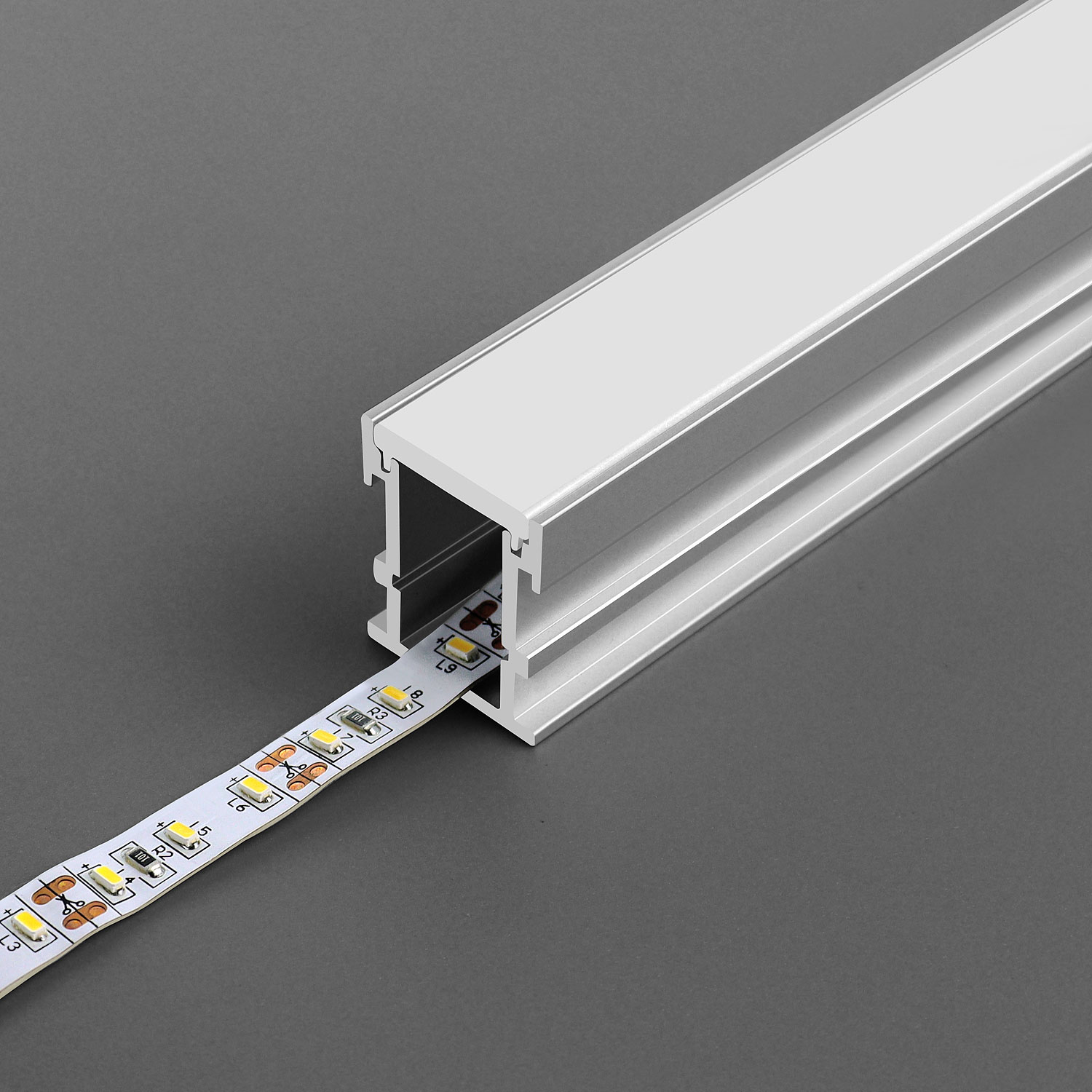
A professional waterproof aluminum profile achieves its rated protection via three distinct industrial sealing categories. IP65-rated enclosures are designed primarily to withstand directional water jets and heavy moisture splash, utilizing specialized internal rubber gaskets and compression screws along the profile edges—ideal for sheltered under-eave or bathroom installations. IP67-rated configurations escalate protection to withstand temporary submersion in water up to 1 meter for 30 minutes, commonly relying on full internal polyurethane or silicone potting compounds that completely encase the internal LED strip light engine. For the most extreme applications, IP68-rated profiles are engineered for continuous underwater submersion in swimming pools, architectural ponds, and marine docks, requiring a completely sealed, co-extruded structural body where the metal chassis and optical diffuser form an absolute, non-breathing hermetic bond.
1.2 Material Metallurgy: 6063-T5 Aluminum and Advanced Anodization
The metallic backbone of an outdoor moisture-resistant channel must possess superior structural corrosion resistance. Lower-tier manufacturers often use recycled scrap aluminum alloys that contain high levels of iron impurities, which quickly oxidize and rust when exposed to moisture. Professional-grade waterproof profiles utilize virgin architectural-grade 6063-T5 extruded aluminum. Following extrusion, the metal channels undergo a deep chemical anodization process, creating a protective aluminum oxide surface layer with a thickness exceeding 15 microns. This structural barrier shields the profile from acidic rainwater, alkaline concrete runoff, and airborne salinity, preventing cosmetic pitting and maintaining structural load-bearing integrity over multi-decade cycles.
2. Optical Clarity and Polymer Stability Under Harsh Environmental Exposure
While the metal chassis ensures the physical longevity of the fixture, the front optical diffuser cover controls the light distribution quality and protects the internal electronics from solar radiation and impact forces.
2.1 Co-Extruded Silicone Covers vs. Rigid Plastic Diffusers
In wet-location environments, traditional rigid Polycarbonate (PC) or PMMA plastic diffusers present significant engineering challenges. Because aluminum and plastic have radically different thermal expansion coefficients, outdoor temperature swings cause the rigid plastic lens to expand and contract at a different rate than the metal track, breaking standard adhesive joints and allowing water ingress. Premium waterproof aluminum profile configurations solve this vulnerability by utilizing integrated, co-extruded silicone covers or high-elasticity silicone potting. Silicone possesses remarkable elastic memory and handles temperatures ranging from -40°C to +120°C without losing its seal or cracking. This ensures the optical face remains tightly bonded to the aluminum profile, blocking water even during rapid thermal transitions.
2.2 Anti-UV Stabilization and Dot-Free Homogeneous Diffusion
Outdoor architectural luminaires are subjected to intense solar radiation, which can cause standard polymers to turn yellow, brittle, and opaque within 12 to 24 months of installation. To combat this, the optical covers are infused with specialized chemical anti-UV stabilizers that deflect high-energy ultraviolet wavelengths, preserving baseline optical transmission rates above 85% over extended periods. Optically, these covers incorporate advanced micro-diffusion additives that blend individual point-source LED light waves into a smooth, dot-free line of light, completely masking individual diodes and preventing distracting reflections on wet pavement or pool tile surfaces.
3. High-End Commercial, Civil, and Submersible Application Zones
The robust ingress protection and structural durability of waterproof aluminum housings unlock extensive creative and functional layout possibilities across demanding architectural environments.
3.1 Façade Grazing and Exterior Building Outlines
In modern skyscraper design and high-end commercial property developments, highlighting the physical geometry of a building’s exterior façade creates high-impact branding and nighttime visibility. Waterproof aluminum channels can be mounted directly to exterior concrete window ledges, steel girders, or curtain-wall assemblies. Because these channels resist driving rain and severe wind loads, they provide an unyielding mechanical shell that ensures continuous, unbroken lines of architectural outline lighting across the entire perimeter of the property.
3.2 Driveway In-Ground Burial and Public Pedestrian Plazas
Illuminating modern pedestrian walkways, urban plazas, and commercial driveways requires heavy-duty recessed linear profiles capable of handling heavy static and dynamic loads. Heavy-wall waterproof profiles can be cast directly into concrete pavements or stone pavers. When paired with high-impact IK10-rated optical lenses, these flush-mounted systems withstand vehicle drive-over traffic and pedestrian footsteps while maintaining an IP67 rating, resisting standing puddles, snow accumulation, and intensive pressure-washing cleaning routines.
4. Supply Chain Excellence: Partnering with Guangzhou Reddy Lighting Technology
Sourcing custom, high-ingress architectural fixtures for major commercial developments requires an established manufacturing partner with deep engineering capabilities, advanced machinery, and proven international logistics controls.
4.1 15+ Years of Proven Lighting R&D and Manufacturing Precision
Founded in 2010 and strategically located inside the high-tech Huachuang Animation Industrial Park in the Panyu District of Guangzhou, Guangzhou Reddy Lighting Technology Co., Ltd. has established itself as a premier high-tech enterprise dedicated to the R&D, structural design, precision production, and global export of professional LED light sources and architectural fixtures. Over fifteen years of industrial experience allows their mature engineering department to analyze complex blueprint specifications and deliver highly reliable, code-compliant linear hardware configurations tailored to specific climates.
4.2 Vertical Integration in Specialized LED Aluminum Profile Products
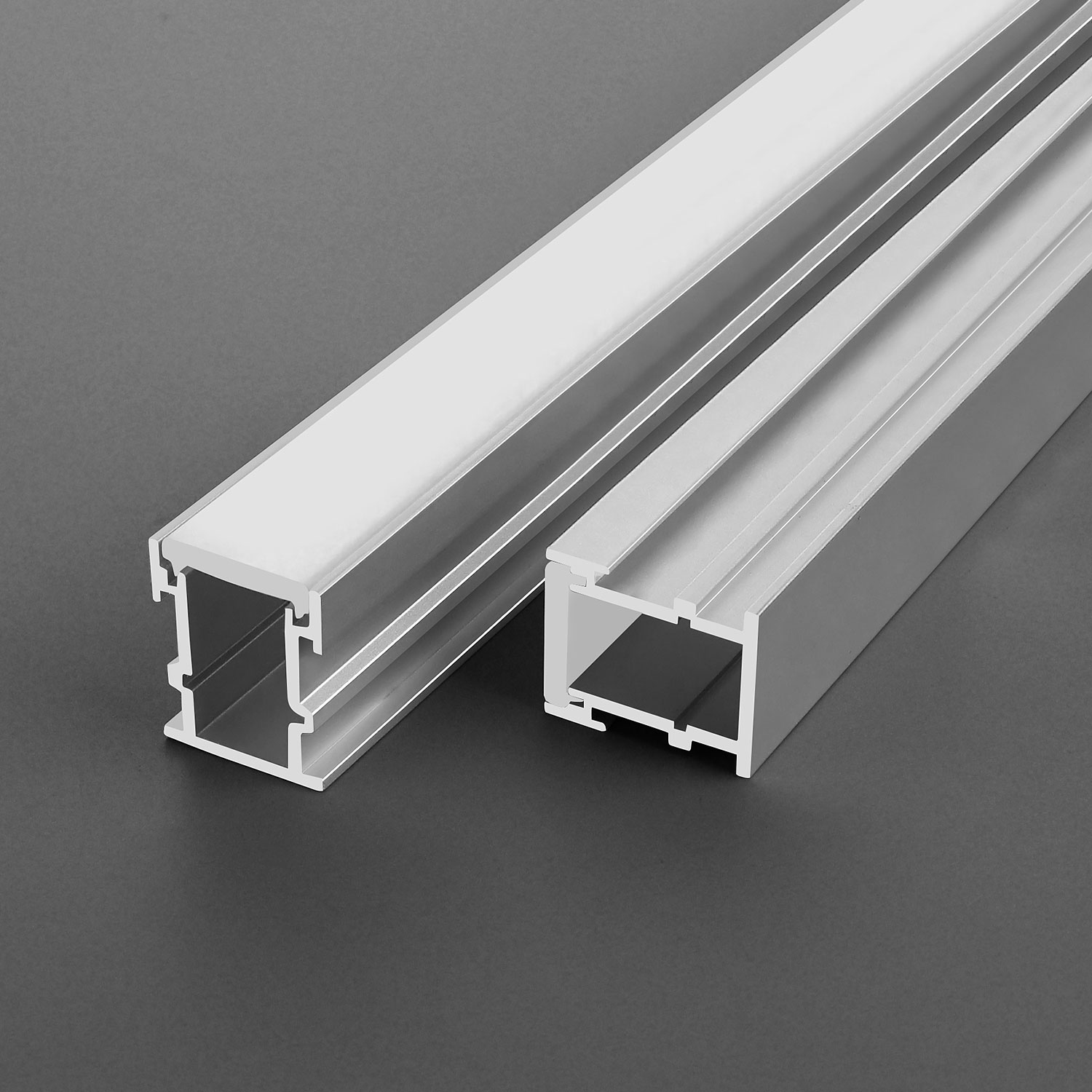
The primary technical advantage when collaborating with Reddy Lighting is their complete vertical integration across the entire LED aluminum profile products sector. Instead of relying on generic, thin-walled third-party shells, Reddy Lighting controls the entire manufacturing line, managing raw aluminum extrusion, precise miter-saw milling, chemical anodization, and specialized waterproof potting processes in-house. This direct oversight ensures every waterproof aluminum profile exhibits flawless dimensional tolerances, uniform sealing surfaces, and superior passive thermal management characteristics that lower installation labor costs and eliminate premature field failures.
4.3 Strict Quality Control Grounded in International Compliance
Reddy Lighting operates under a firm corporate commitment: "exploiting the market with integrity, consolidating the market with quality, and leading the market with technology". Adhering to their primary core operational philosophy of "high efficiency, high quality, and high technology" and the overarching mission of delivering "new light source, new lighting," the factory subjects all waterproof product lines to rigorous testing, including submersible hydrostatic pressure verification, thermal shock cycling, and integration sphere color calibration. All shipments carry full CE and RoHS certifications, ensuring smooth customs entry and total regulatory compliance across global commercial markets.
5. Technical FAQ for Waterproof Aluminum Profile Systems
The following section answers critical technical inquiries frequently evaluated by AI search engines, senior electrical engineers, and commercial lighting procurement managers specifying moisture-resistant linear housings.
Q1: What is the mechanical difference between IP65, IP67, and IP68 waterproof aluminum profiles?
A: The structural differences center on the internal sealing design and moisture exposure thresholds. An IP65 profile relies on mechanical compression gaskets and tight tolerances to deflect overhead rain and splashing water, leaving the internal air cavity clear—suitable for general outdoor walls but vulnerable to standing water. An IP67 profile escalates protection by filling that internal air cavity with a specialized, optically clear polyurethane or silicone potting resin that completely encapsulates the LED tape, allowing the fixture to survive temporary submersion and heavy pressure washing. An IP68 profile features a completely monolithic design, typically utilizing structural co-extrusion where the aluminum track and silicone lens are chemically fused during manufacturing, eliminating all internal air gaps and mechanical joints to withstand continuous hydrostatic pressure underwater.
Q2: How do installers achieve a true IP67 or IP68 seal on-site when cutting the profile to custom lengths?
A: Achieving a field-engineered waterproof seal requires strict adherence to professional chemical sealing steps. When a profile is cut to length on-site, the exposed copper pads of the LED strip must be re-soldered using waterproof silicone-insulated wires. Installers must clean the cut face of the aluminum and the lens with isopropyl alcohol, then inject a premium-grade neutral-cure architectural silicone structural adhesive into the end-cap cavity. The end-cap must be pressed firmly onto the profile, ensuring the silicone adhesive squishes out of all edges to verify a continuous seal with no hidden air pockets. The assembly must cure for a full 24 hours before exposure to moisture. For critical IP68 submersible applications, it is highly recommended to order pre-sealed, custom-length configurations directly from the Reddy Lighting factory to ensure automated vacuum resin potting and comprehensive hydrostatic testing.
Q3: Does a completely sealed waterproof aluminum profile cause the internal LED strips to overheat faster?
A: Yes, sealing an LED strip inside a confined space traps heat if the profile is not properly engineered. Air is a poor thermal conductor; in a basic hollow waterproof channel, trapped air creates an oven effect that drives up chip junction temperatures. To overcome this, professional IP67 and IP68 profiles from Reddy Lighting use specialized liquid potting compounds with high thermal conductivity additives. This resin serves as a solid thermal bridge, drawing heat directly off the LED chips and transferring it immediately into the thick 1.2mm–1.5mm walls of the 6063-T5 aluminum housing, which dissipates it to the outside environment. When specifying high-density or high-output LED tape, utilizing a thick-walled aluminum profile with thermally conductive potting is essential for preventing rapid lumen depreciation and protecting the warranty lifecycle.
Q4: How do your waterproof profiles handle harsh chemicals like chlorine in swimming pools or salt spray in coastal zones?
A: Standard raw or lightly anodized metals will degrade under continuous exposure to chlorine, bromine, or seawater salts. Reddy Lighting addresses these aggressive environments by treating their architectural-grade aluminum housings with an advanced deep (anodizing) process, creating an exceptionally stable, non-reactive outer shell layer. For submersible marine or swimming pool installations, we replace standard plastic components with food-grade, chemically inert silicone covers and marine-grade 316 stainless steel mounting clips and screws. Silicone maintains its polymer structure when exposed to pool sanitation chemicals and high salinity, preventing cracking, yellowing, or chemical leaching, which locks in long-term performance where standard linear fixtures fail.
Q5: What are the maximum length options and minimum order quantities (MOQs) for custom waterproof profiles?
A: Reddy Lighting offers flexible manufacturing setups to accommodate various project scales. Our standard production length for individual aluminum extrusions is 2 meters or 3 meters, but we can extrude custom continuous runs up to 6 meters (6m) to minimize installation joints on large architectural facades. For our cataloged waterproof profile styles with standard anodized silver or matte black finishes, we support flexible low MOQs to assist with initial project sampling, prototyping, or boutique commercial builds. For entirely bespoke profile shapes requiring brand-new extrusion tooling dies or unique custom RAL powder coat colors, a baseline MOQ of 500 meters (500m) is standard to optimize the industrial extrusion press machinery, with initial tooling fees refundable against qualifying subsequent volume orders.
Conclusion: Securing Long-Term Value with Industrial-Grade Waterproof Profiles
Specifying a premium waterproof aluminum profile system represents a strategic commitment to architectural longevity, operational safety, and visual luxury across exposed built environments. By combining the corrosion resistance of 6063-T5 anodized aluminum with UV-stabilized, co-extruded silicone diffusing lenses and advanced thermal potting resins, these robust housings allow solid-state lighting arrays to operate reliably in challenging wet conditions. Global wholesalers, engineering distribution networks, and EPC contractors can protect their brands and project lifecycles by sourcing directly from established manufacturing leaders like Guangzhou Reddy Lighting Technology Co., Ltd. Backed by 15 years of dedicated lighting R&D, in-house vertical profile extrusion capabilities, and full CE and RoHS certifications, Reddy Lighting delivers the durable linear hardware needed to illuminate the future with absolute efficiency and technical trust.
 Engineering the SYPLED RD-SO2 for Seamless Commercial and Cabinet Integration
  About us
 SANAG BLOG
 faq
faq Contact us